


For millions of Americans, the workshop or job site is a place of productivity, creativity, and craftsmanship. Whether you are a professional contractor navigating a high-stakes construction project or a dedicated DIY enthusiast tackling a weekend home renovation, the tools you hold in your hands are powerful instruments. However, with that power comes a significant degree of risk.
The Occupational Safety and Health Administration (OSHA), the federal agency tasked with ensuring safe and healthful working conditions, maintains a rigorous set of guidelines designed to mitigate these hazards. By distilling years of accident data and industry best practices, OSHA has established five core safety principles for hand and power tools. These rules are not merely bureaucratic suggestions; they are the bedrock of workplace safety. Ignoring them can turn a productive afternoon into a life-altering emergency.
1. Maintain Your Tools to Prolong Their Life
The first rule of tool safety is perhaps the most fundamental: Maintain your equipment. Every tool, from a precision screwdriver to a heavy-duty impact wrench, is subject to wear and tear. Over time, constant friction, exposure to moisture, and the accumulation of shop debris—such as metal shavings, sawdust, and chemical residues—can compromise the structural integrity of the tool.

The Hidden Dangers of Neglect
Many hobbyists operate under the assumption that high-quality, professional-grade tools are impervious to the environment. While modern tools often feature oil-resistant handles and sealed housings, they are not invincible. When a tool is coated in oil or water, it loses its grip, significantly increasing the likelihood of a slip-related injury.
Beyond immediate safety, neglected tools fall victim to oxidation and corrosion. A rusty blade or a seized gear mechanism doesn’t just perform poorly; it becomes unpredictable. When a tool is forced to work against the resistance of rust or grime, the user is forced to apply excessive, uneven pressure, which is a leading cause of tool failure and operator fatigue. Routine maintenance—wiping down tools after every session, cleaning grooves with a wire brush, and applying machine oil where necessary—is a non-negotiable aspect of responsible tool ownership.
2. Always Use the Right Tool for the Job
The temptation to "make it work" is one of the most dangerous impulses in any workshop. The adage "every tool is a hammer" is a popular, albeit disastrous, mantra among those looking to save time. Using a wrench to pry a board, using the back of a screwdriver as a mallet, or employing an undersized drill for a heavy-duty task is a recipe for disaster.

Efficiency vs. Safety
When you deviate from a tool’s intended use, you enter a "danger zone" where the mechanics of the tool are no longer working in your favor. If you use a screwdriver as a chisel, you risk shattering the handle or snapping the steel shaft, which can send shrapnel flying into your eyes or skin. Furthermore, using the wrong tool is almost always inefficient. You exert more energy, lose control over the workpiece, and often end up causing cosmetic or structural damage to your project. OSHA mandates that operators select tools specifically engineered for the task at hand. If you find yourself reaching for an improvised solution, stop. If you don’t have the right tool, the safest path forward is to acquire one or seek a different, safer method to achieve your goal.
3. Don’t Use Damaged Tools
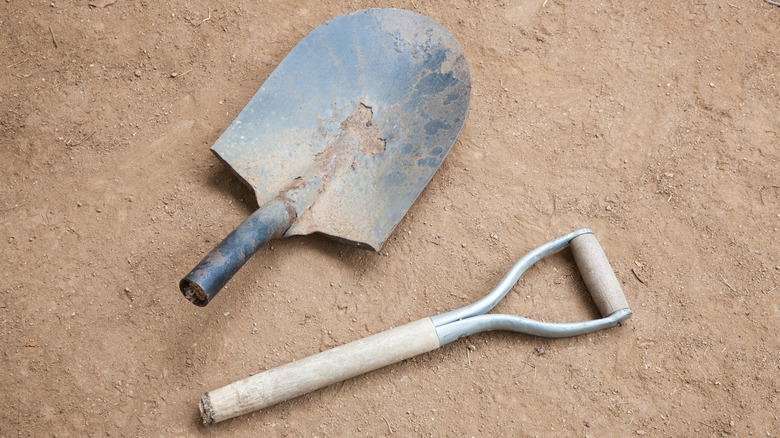
There is no "good enough" when it comes to tool condition. Using a damaged tool is essentially gambling with your safety. This includes tools with frayed electrical cords, cracked handles, dull blades, or missing safety guards.
Identifying the Risks
A damaged tool often exhibits erratic behavior. A power tool with a faulty trigger mechanism might start unexpectedly; a blade with a missing tooth can catch on material, causing the tool to kick back violently toward the operator. These events happen in fractions of a second, leaving the user with almost no time to react.
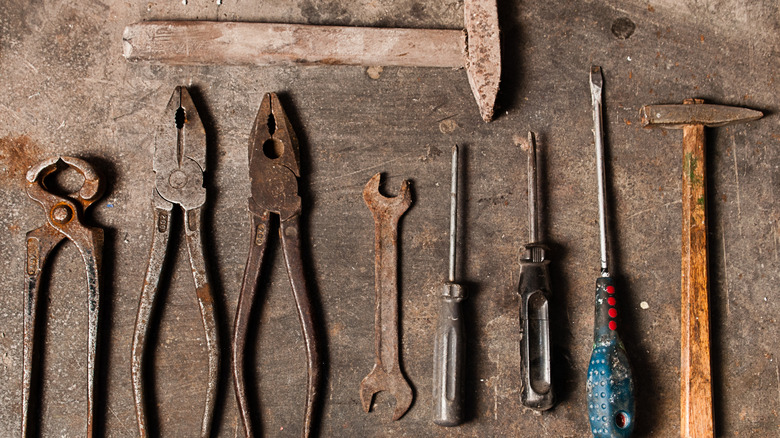
If you find a tool that is damaged, it should be tagged "Out of Service" immediately and removed from the workspace. It is far cheaper to repair or replace a tool than to pay for medical treatment, lost work time, or long-term disability. Always perform a "pre-flight" check of your gear before plugging it in or putting it to work. If it looks compromised, do not trust it.
4. Use Your Tools as They’re Intended
Modern power tools are marvels of engineering, designed to operate within specific parameters—speeds, torque limits, and bevel angles. When users modify these tools or push them beyond their rated capacities, they are effectively bypassing the safety features built into the machine.
The Perils of Improvisation
While some seasoned professionals may customize tools for hyper-specific tasks—such as modifying a wrench for tight engine clearances—this should only be done by experts who fully understand the mechanical implications of the modification. For the average user, "improvisation" usually results in an unstable, dangerous configuration.
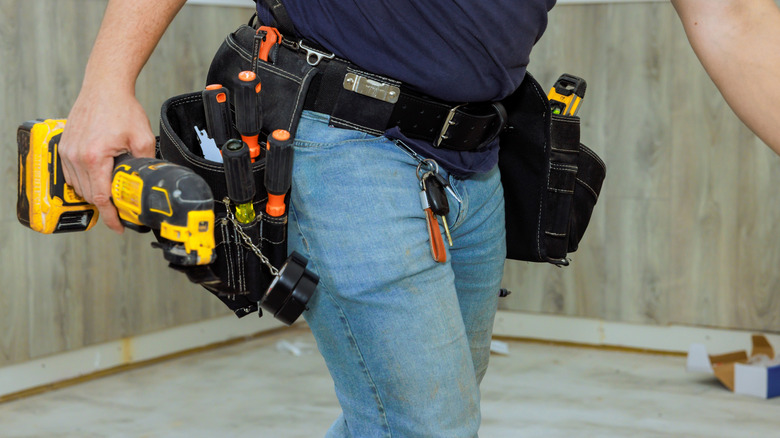
For instance, pushing a circular saw past its maximum bevel capacity puts immense, unintended strain on the motor and the blade arbor. This can cause the tool to bind, overheat, or even shatter the blade. By sticking strictly to the manufacturer’s user manual, you ensure that the tool functions within the protective parameters established during its safety testing phase. If the tool wasn’t built to do it, don’t force it.
5. Use the Correct Personal Protective Equipment (PPE)
The final pillar of OSHA’s safety framework is the use of proper Personal Protective Equipment (PPE). Even when all other safety rules are followed, the nature of mechanical work involves inherent risks like flying debris, high-decibel noise, and dust inhalation.
The Shield Against Injury
PPE is the last line of defense between you and a life-altering accident.
- Eye Protection: Safety glasses or face shields are mandatory. Even a small piece of wood chip or a metallic spark traveling at high velocity can cause permanent vision loss.
- Hearing Protection: Prolonged exposure to the hum of power tools, particularly saws and sanders, causes cumulative hearing loss. Earplugs or noise-canceling muffs are essential for long-term health.
- Respiratory Protection: Fine dust particles from sanding or toxic fumes from paints and solvents can damage your lungs over time. Using an N95 mask or a respirator is crucial in enclosed spaces.
Your health is your most valuable asset. No project is worth sacrificing your hearing, your sight, or your respiratory function. PPE is inexpensive and widely available; failing to wear it is an avoidable oversight that carries a massive, permanent cost.
The Implications of Safety Oversight
OSHA’s regulations are derived from decades of incident reports. The agency’s role is not just to penalize businesses but to provide a blueprint for human preservation. When an injury occurs on a job site, the implications extend far beyond the individual. There are insurance premiums, legal liabilities, and the potential for a complete halt of operations.
For the DIYer, the stakes are equally high. An accident in the garage can lead to thousands of dollars in medical bills and a permanent reduction in your quality of life. By integrating these five rules into your daily routine—maintenance, proper tool selection, condition checking, intended use, and PPE—you are not just "following rules." You are adopting a professional mindset that prioritizes long-term capability over short-term expediency.

Ultimately, a truly skilled craftsperson is defined by their precision and their respect for the equipment they use. By adhering to these five OSHA principles, you ensure that your workshop remains a place of creation, not a place of regret. Safety is not a one-time effort; it is a continuous, conscious choice made every time you pick up a tool. Stay alert, keep your gear in top shape, and always prioritize your well-being.












No comments yet. Be the first to join the conversation!