

By Investigative Desk
October 2026
In an era defined by deep-seated political polarization and heightened civil unrest, the intersection of music and activism has found a new, thunderous focal point. Bruce Springsteen, alongside longtime collaborator and Rage Against the Machine guitarist Tom Morello, has officially announced the "Power to the People" festival, a massive, one-day musical mobilization scheduled for October 3 at the Merriweather Post Pavilion in Columbia, Maryland.
The announcement, delivered with characteristic intensity during Springsteen’s concert at Nationals Park in Washington, D.C., signals a strategic effort to influence the electorate just one month ahead of the crucial midterm elections. With a lineup that reads like a who’s who of modern social-justice-oriented music, the event is positioned not merely as a concert, but as a rallying cry for a nation Springsteen describes as being at a precarious crossroads.
The Main Facts: A Call to Action
The "Power to the People" festival is slated to be a two-stage, day-long event centered on the themes of freedom, justice, equality, and the transformative power of rock ‘n’ roll. The star-studded roster includes heavyweights such as the Foo Fighters, Dave Matthews, Brittany Howard, and folk icon Joan Baez. The supporting bill is equally formidable, featuring the Dropkick Murphys, Jack Black, Serj Tankian, Killer Mike, Taylor Momsen, and The Linda Lindas.
Beyond the musical performances, the festival is heavily integrated into the electoral process. A significant portion of the proceeds from all ticket sales will be directed toward VoteRiders and HeadCount—two organizations dedicated to ensuring voter participation and overcoming barriers to the ballot box. By placing the event in the Washington, D.C. area, organizers are signaling a direct intent to bring their message to the doorstep of the federal government.
Chronology of a Protest: From Nationals Park to the Pavilion
The genesis of the festival became public on a Wednesday evening at Nationals Park, amidst the final leg of Springsteen’s "Land of Hope and Dreams" American Tour. The atmosphere in the stadium was already charged with political tension before the formal announcement was made.
Springsteen’s setlist served as a precursor to the festival’s mission. He performed a string of politically charged anthems, most notably "American Skin (41 Shots)," a poignant reflection on police violence, and "Streets of Minneapolis," a song written in direct response to the deaths of Renée Good and Alex Pretti, who were killed by federal immigration agents.
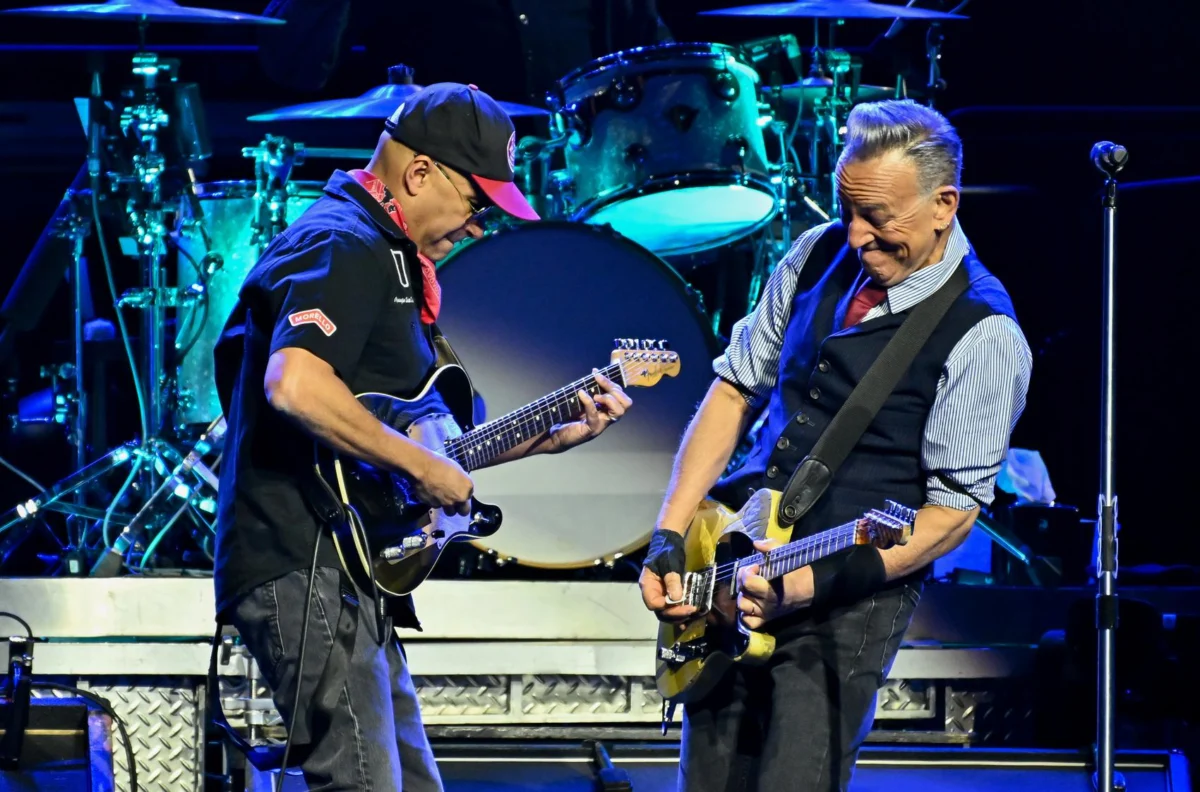
The announcement followed a period of intense collaboration between Springsteen and Morello. As the concert drew to a close, the two took the stage to address the crowd directly. Springsteen’s rhetoric was blunt and unyielding. "The Gestapo tactics of this president and this administration will not stand here," he declared to a roar of approval. The concert concluded with a symbolic "ICE out!" chant, which Springsteen led, urging the audience to ensure their voices reached the White House. He ended the night with Bob Dylan’s "Chimes of Freedom," a choice that underscored the evening’s theme of democratic vigilance.
Supporting Data: The Landscape of Modern Activism
The decision to host the festival in October is no coincidence. Historically, the month preceding midterm elections is the most critical window for voter mobilization. Statistics from recent cycles indicate that voter turnout in midterms is often significantly lower than in presidential years, making the influence of "get-out-the-vote" initiatives like HeadCount vital.
- Voter Engagement: Research by HeadCount suggests that music-centered drives can increase voter registration rates among the 18–35 demographic by as much as 25% compared to traditional mail-in efforts.
- The Power of Advocacy: VoteRiders, the other beneficiary, provides essential support for voters navigating complex voter ID laws. In states where these laws have been tightened, the organization’s work is statistically linked to reducing the number of rejected ballots.
- Economic Impact: The choice of the Merriweather Post Pavilion—a historic venue known for its capacity to host large-scale, socially conscious events—allows the organizers to accommodate tens of thousands of fans, maximizing both the fundraising potential for these organizations and the visibility of the message.
The festival also arrives at a time of public debate regarding federal agency conduct. The specific mention of the deaths of Renée Good and Alex Pretti brings into focus the ongoing controversy surrounding federal immigration enforcement, a topic that has galvanized progressives and human rights groups across the country.
Official Responses and Political Friction
The announcement has naturally sparked a firestorm of political reactions. The ongoing animosity between Springsteen and the Trump administration is well-documented and has reached new levels of public vitriol.
President Trump, who has frequently taken to social media to denounce the musician, has previously called for a boycott of Springsteen’s tours, labeling him a "total loser who spews hate." While the White House has not issued an official statement regarding the "Power to the People" festival, surrogates for the administration have criticized the event as an attempt by the "Hollywood elite" to interfere with the democratic process.
Conversely, supporters of the festival emphasize the necessity of public dissent. In a formal statement, Tom Morello articulated the underlying philosophy of the event: "It’s about the power everyday human beings have when they come together through music, art, community, and action. We’re honored to bring this incredible lineup to the DC area for a day that celebrates the spirit of activism, creativity, and hope."
The alignment of such a diverse group of artists—from the punk-infused energy of the Dropkick Murphys to the lyrical depth of Joan Baez—suggests a broad coalition that transcends genre boundaries, aiming to create a "united front" that organizers hope will resonate with a disenfranchised electorate.
Implications: A Summer of Discontent, A Fall of Action
The implications of this festival extend far beyond the stage. By framing the current political climate as an "American tragedy," Springsteen and his fellow artists are challenging the traditional boundaries of celebrity involvement in politics. They are moving away from passive endorsements and toward active, logistical support for the electoral process.
The Impact on Voter Turnout
The success of the festival will likely be measured not just by ticket sales, but by the number of new voter registrations processed on the day of the event. If the "Power to the People" festival successfully captures the energy of the D.C. metropolitan area, it could serve as a template for how the entertainment industry can act as a catalyst for political engagement in the 21st century.
The Risk of Polarization
However, critics argue that such high-profile, politically charged events risk deepening the divide between the two major political parties. By openly labeling the administration as "incompetent" and "treasonous," Springsteen is making it clear that the festival is not an attempt at bipartisan bridge-building, but a mobilization for a specific vision of America.
The Cultural Legacy
Finally, the event represents a potential shift in the role of the modern rock star. As the digital age has democratized the spread of information, artists like Springsteen, Morello, and Brittany Howard are leveraging their massive platforms to bridge the gap between digital activism and physical presence. As the October 3 date approaches, the eyes of the nation will be on Maryland. Whether this gathering acts as a turning point in the midterm cycle or simply as a powerful echo chamber for the disillusioned remains to be seen.
As Springsteen stated on the stage at Nationals Park, "There is no one coming to save us. We’ve got to do it ourselves." With the "Power to the People" festival, the music industry is clearly betting that the "ourselves" includes a massive, energized, and politically active fan base.












No comments yet. Be the first to join the conversation!