Azzam Bilal Chamdy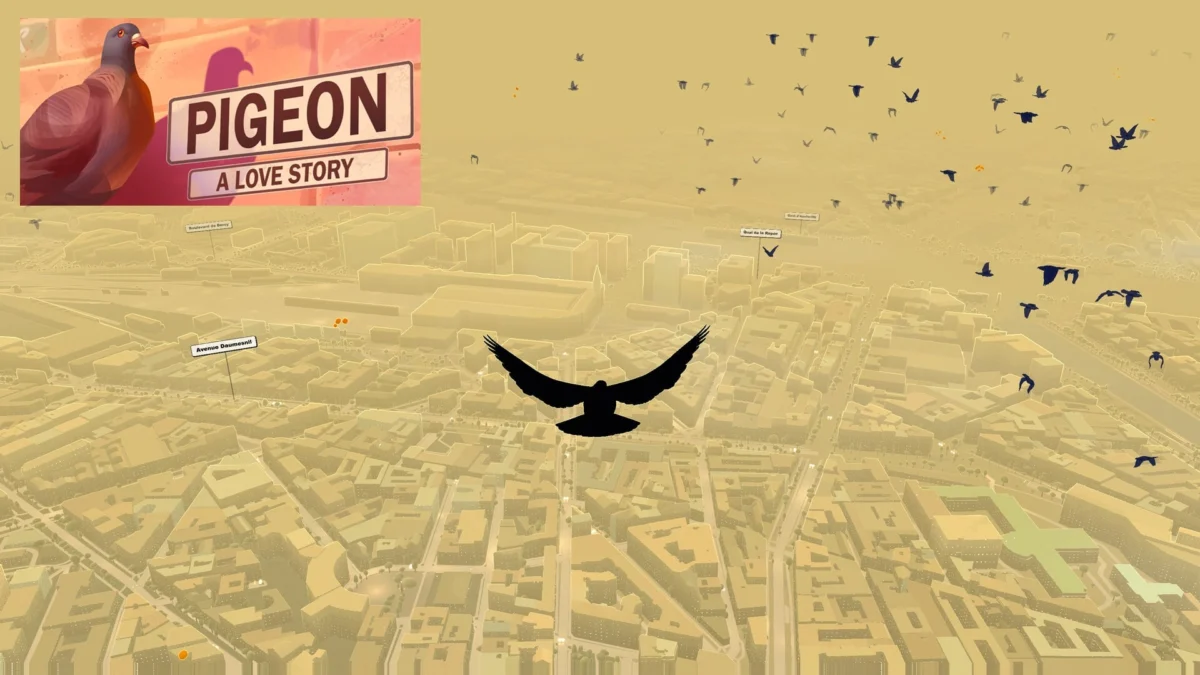
LONDON, UK – In an industry often dominated by high-octane action and sprawling fantasy epics, a new title is poised to carve out a uniquely contemplative niche, promising an experience as peculiar as it is profound. Publisher Tiny Dragon Games and developer Wristwork have officially announced "Pigeon: A Love Story," a game that defies conventional categorization, inviting players to embrace the mundane-turned-magnificent life of an urban bird. Set to launch its first public demo during the highly anticipated Steam Next Fest, this title for mobile and PC is already generating buzz for its audacious premise and ambitious technical execution.
"Pigeon: A Love Story" casts players as a lone pigeon, embarking on an existential quest for companionship amidst meticulously recreated, real-world cityscapes. Far from a mere backdrop, these environments are rendered at actual scale, leveraging authentic OpenStreetMap data to bring iconic locations like London, Paris, New York, Amsterdam, and Tokyo to life with unprecedented fidelity. Populated by millions of procedurally simulated avian inhabitants, the game challenges players to find their "one-in-a-million" soulmate by calling out across vast, bustling urban expanses. It’s a concept that is simultaneously absurd and deeply resonant, encapsulating themes of loneliness, connection, and the quiet beauty of everyday existence.
Main Facts: A Feathered Odyssey of Love and Loneliness
"Pigeon: A Love Story" emerges as a standout title from the London-based development studio, Wristwork, marking their ambitious sophomore project. The game’s core premise is refreshingly simple yet profoundly complex: players embody a single pigeon navigating the intricate, bustling environments of global metropolises, all in pursuit of a romantic connection. This isn’t just a flight simulator; it’s a social simulation wrapped in an open-world exploration package, seen from the unique perspective of a common urban bird.
The game’s most striking feature is its commitment to recreating real-world cities with astonishing accuracy. By integrating authentic OpenStreetMap data, the developers have managed to render sprawling urban centers like London, Paris, New York, Amsterdam, and Tokyo at their true scale. This architectural authenticity means that players can fly over familiar landmarks, traverse genuine street layouts, and experience the sheer vastness of these global hubs from a truly unique vantage point. The scale itself is a testament to the game’s ambition, transforming the familiar into an alien landscape for its avian protagonist.
Crucially, these hyper-realistic environments are not barren. Wristwork has implemented "Pigeon-Sim" technology, a proprietary system designed to populate the game world with hundreds of thousands, if not millions, of autonomous pigeon NPCs. These simulated birds contribute to a living, breathing ecosystem, creating a dynamic backdrop against which the player’s personal quest unfolds. The challenge, then, becomes a literal "needle-in-a-haystack" scenario: finding a specific feathered companion among countless others, echoing the real-world search for connection in densely populated societies.
The developers describe "Pigeon: A Love Story" as "a needle-in-a-haystack simulator that’s about nothing and everything. It’s a slow game built for fast times." This poetic description hints at a deliberate design philosophy that prioritizes introspection and atmosphere over frenetic action. It’s a game designed for contemplation, for players seeking a different pace, a moment of digital respite from the demands of modern life. Further enhancing this experience are features such as "Coo-op" multiplayer, allowing players to share their journey with a friend, and a unique "Passive Mode" that transforms the game into a dynamic screensaver, letting the intricate simulation unfold independently. An original, meditative soundtrack further underscores the game’s tranquil and immersive ambiance, encouraging players to lose themselves in the skies above concrete jungles.
Chronology: From Concept to Coo-op in the Cloud
The journey of "Pigeon: A Love Story" from an intriguing concept to a playable demo has been a testament to Wristwork’s dedication to innovative game design. While details of their prior work remain largely under wraps, this "sophomore project" clearly demonstrates a studio unafraid to push boundaries and challenge player expectations.
The initial announcement of "Pigeon: A Love Story" immediately captured attention, primarily due to its unconventional premise. In an industry often leaning towards established genres, the idea of embodying a pigeon in a quest for love resonated with many as a refreshing, albeit bizarre, proposition. This initial reveal served to pique curiosity and set the stage for what was to come.
A significant milestone in the game’s development cycle is its participation in the upcoming Steam Next Fest. This event is a crucial platform for indie developers, offering a global stage to showcase playable demos and gather invaluable community feedback. For "Pigeon: A Love Story," the Steam Next Fest demo represents the first tangible opportunity for players to immerse themselves in its unique world. This initial demo focuses on the recreation of London, one of the game’s flagship cities, allowing players to experience the vastness and detail of its authentic OpenStreetMap-driven environment.
The demo introduces several key gameplay innovations, including the "Speak to Coo" feature. This immersive mechanic allows players to connect a real-world microphone and physically "coo" into it, triggering their in-game pigeon’s mating call. This direct, vocal interaction adds an unprecedented layer of immersion and intimacy, bridging the gap between player and avatar in a truly unique way. Furthermore, the demo also includes the "Coo-op" multiplayer functionality, enabling friends to flock together and explore the detailed London skies as a united pair. This early integration of multiplayer suggests a commitment to fostering a shared, if still contemplative, experience.
Beyond gameplay mechanics, the developers have also poured significant effort into the visual presentation of the demo. The London cityscape boasts enhanced atmospheric shadows, contributing to a more realistic and dynamic sense of time and weather. Realistic sunshine rendering further elevates the visual fidelity, bathing the urban sprawl in authentic light. Subtle yet impactful details, such as procedural urban graffiti, add to the organic, lived-in feel of the city, ensuring that while the scale is grand, the minute details are not overlooked. The forthcoming full release, slated for later this year, promises to expand upon these foundational elements, introducing more cities, deeper mechanics, and refining the overall experience. The current availability of the game’s Steam page offers a direct portal for eager players to wishlist the title and stay updated on its progression, while anticipation builds for its eventual mobile debut.
Supporting Data: Engineering Authenticity and Empathy
The peculiar charm of "Pigeon: A Love Story" is underpinned by a robust technical framework and a deeply considered design philosophy, both of which aim to deliver an experience that is at once expansive and intimately personal.
Technical Prowess and Environmental Realism:
The decision to utilize authentic OpenStreetMap data for city recreation is a cornerstone of the game’s technical ambition. OpenStreetMap, a collaborative project to create a free editable map of the world, provides an unparalleled level of geographical detail. By integrating this data, Wristwork bypasses the need for hand-crafting entire cities, instead leveraging real-world blueprints to construct environments that are not only vast but also geographically accurate. This means that landmarks, street layouts, and urban topography in cities like London, Paris, and Tokyo will mirror their real-life counterparts, offering a sense of immediate recognition for players familiar with these locations. The challenge lies in translating this raw map data into a visually compelling and interactive 3D environment, a feat that requires sophisticated rendering pipelines and efficient asset streaming to maintain performance across PC and mobile platforms. The "actual scale" recreation further amplifies the sense of immersion, allowing players to appreciate the true distances and architectural grandeur of these global hubs from an aerial perspective.
The "Pigeon-Sim" technology stands as another significant technical achievement. Managing "hundreds of thousands of autonomous pigeon NPCs" is no small feat. This requires advanced AI pathfinding, behavior trees, and efficient rendering techniques to prevent performance bottlenecks. Each NPC likely possesses a basic set of behaviors – foraging, roosting, flying in flocks, and reacting to environmental stimuli – all contributing to the illusion of a vibrant, self-sustaining avian ecosystem. This mass simulation is critical for the "needle-in-a-haystack" gameplay, ensuring that the player’s search for a mate feels genuinely challenging and organic, rather than merely scripted.
The "Speak to Coo" feature, enabling microphone input for in-game calls, is a brilliant stroke of immersive design. Technically, this involves real-time audio input processing, likely with some form of voice recognition or decibel detection to trigger the in-game pigeon’s mating call. This direct interaction bypasses traditional button presses, forging a more primal and empathetic link between the player and their virtual avian counterpart. It’s a subtle yet powerful innovation that heightens the game’s unique emotional resonance. Visually, the updated demo’s atmospheric shadows, realistic sunshine rendering, and procedural urban graffiti are crucial for grounding the game in a believable reality. These graphical enhancements leverage modern rendering techniques to create dynamic lighting and intricate surface details, further blurring the line between simulation and reality.
Design Philosophy and Player Experience:
Wristwork’s description of the game as "a needle-in-a-haystack simulator that’s about nothing and everything" encapsulates its paradoxical design. On one hand, it’s a simple quest for a mate, a seemingly trivial pursuit. On the other, it becomes an allegory for universal themes: the search for connection, the experience of loneliness in a crowd, and the beauty found in the everyday. This philosophical depth elevates it beyond a mere novelty game.
The deliberate choice to make it "a slow game built for fast times" positions "Pigeon: A Love Story" as an antidote to the prevalent high-intensity gaming experiences. It caters to a growing segment of players seeking "cozy games" – titles that offer relaxation, mindfulness, and gentle exploration. The meditative atmosphere, heavily influenced by an original, calming soundtrack, is central to this design goal. It encourages players to slow down, observe, and engage with the world at a more deliberate pace.
The inclusion of "Coo-op" multiplayer transforms the solitary quest into a shared journey. While the core remains finding a mate, the ability to explore with a friend adds a layer of social interaction, potentially leading to cooperative discovery or simply shared moments of aerial tranquility. The "Passive Mode," allowing the simulation to run like a screensaver, further emphasizes the game’s ambient, observational quality. It speaks to a desire to create a persistent, living world that can be appreciated even without active player input, blurring the lines between game, digital art, and interactive environment.
Market Context and Indie Innovation:
"Pigeon: A Love Story" stands out in the gaming market precisely because of its unusual premise. In an industry often accused of stagnation, indie developers like Wristwork are crucial for pushing creative boundaries. Their willingness to explore unconventional concepts and mechanics demonstrates the vibrant experimental spirit alive in the independent game scene. The game’s presence at Steam Next Fest is strategically vital; it provides crucial visibility, generates early community engagement, and allows developers to gather direct feedback, which is indispensable for refining the game before its full release. The planned simultaneous release on mobile and PC further broadens its potential audience, tapping into both dedicated PC gamers and casual mobile players looking for unique experiences.
Official Responses: The Vision Behind the Feathers
While direct quotes from Tiny Dragon Games or Wristwork are sparse in the initial announcement, the game’s unique design speaks volumes about the developers’ vision and potential inspirations. It’s evident that "Pigeon: A Love Story" is not merely a technical exercise but a project imbued with a distinct artistic and philosophical intent.
One can infer that the inspiration behind the game likely stems from an observation of the ordinary, transformed into the extraordinary. Pigeons, often overlooked or even reviled in urban environments, become protagonists, forcing players to see the world from a radically different perspective. This shift in perspective is a hallmark of thoughtful game design, encouraging empathy and a re-evaluation of our surroundings. The decision to focus on "love" and "connection" within this avian context suggests a desire to explore universal human themes through an unconventional lens, perhaps as a commentary on the often-solitary experience of modern urban life, where millions coexist but genuine connection can be elusive.
The developers’ choice to embrace the "weird" and the "slow" likely reflects a deliberate rejection of industry trends towards constant stimulation and instant gratification. This could be a conscious effort to carve out a niche for players who appreciate contemplation, atmosphere, and a more introspective form of gameplay. The challenges in developing such a game – particularly the massive scale of city recreation and the intricate AI of millions of NPCs – would have been substantial. One can imagine the developers grappling with optimization, graphical fidelity, and ensuring that the "Pigeon-Sim" technology truly brings the world to life without overwhelming system resources. Their ability to deliver a robust demo, complete with advanced features like "Speak to Coo," speaks to their technical prowess and commitment to realizing their ambitious vision.
The integration of player voice through the "Speak to Coo" feature highlights a developer team keenly interested in immersive technologies and novel forms of interaction. This isn’t just about gameplay; it’s about fostering a deeper, almost intimate, connection between the player and the digital world. The expectation for Steam Next Fest would undoubtedly be to gather a diverse range of feedback – not just on technical performance, but also on the emotional resonance of the game, the effectiveness of its core loop, and the overall player experience. Such feedback is invaluable for an indie studio, allowing them to refine mechanics, adjust pacing, and ensure the final product truly delivers on its promise. Looking ahead, one might surmise that the developers envision a future for "Pigeon: A Love Story" that could include additional cities, further social mechanics, or even seasonal events, expanding the world and deepening the player’s ongoing relationship with their avian avatar and its urban habitat. Their focus on a meditative atmosphere and a "slow game" suggests a long-term vision for a title that players can return to for moments of quiet reflection and unique exploration.
Implications: Reshaping Perceptions and Playstyles
"Pigeon: A Love Story" is poised to make a significant impact, not just as an entertainment product, but as a potential catalyst for broader discussions within the gaming industry and among players. Its very existence challenges established norms and offers a glimpse into evolving trends in interactive entertainment.
Implications for the Gaming Industry:
The game represents a powerful example of how indie developers continue to push the boundaries of creativity and genre. In a landscape often criticized for iterative sequels and safe bets, "Pigeon: A Love Story" champions originality. It suggests a growing appetite for experimental titles that prioritize unique experiences and artistic expression over conventional gameplay loops. This could inspire other studios to explore similarly unconventional premises, fostering a more diverse and innovative ecosystem of games.
The game’s use of real-world data, specifically OpenStreetMap, could also signal a trend towards more grounded, authentic virtual worlds. While fantasy and sci-fi continue to dominate, the ability to seamlessly integrate real-world geographical information opens up exciting possibilities for educational games, highly realistic simulations, and titles that explore familiar environments from novel perspectives. This blurs the line between traditional gaming and digital tourism, offering a new way to experience global landmarks.
Furthermore, "Pigeon: A Love Story" contributes to the burgeoning "cozy game" movement. This niche, characterized by low-stress gameplay, gentle aesthetics, and an emphasis on relaxation and mindfulness, is gaining significant traction. The game’s meditative atmosphere, slow pace, and passive mode align perfectly with this trend, demonstrating that not all successful games need to be competitive or action-packed. This can help validate and expand the market for games that prioritize well-being and contemplative experiences.
Implications for Player Experience:
For players, "Pigeon: A Love Story" offers a unique opportunity for introspection and a distinct form of escapism. It challenges players to adopt a new perspective, literally and figuratively, forcing them to re-evaluate their relationship with urban environments and the creatures within them. The deliberate "slow game" design caters to individuals seeking a digital sanctuary, a space to unwind and engage with a world at a more deliberate pace. In a world saturated with information and constant demands on attention, a game that encourages observation and patience can be deeply therapeutic.
The "Speak to Coo" feature, in particular, has profound implications for immersion. By directly integrating the player’s voice into the game’s core mechanic, it creates a powerful, almost primal connection. This kind of innovative input can deepen empathy and make the player feel genuinely intertwined with their avatar’s journey, fostering a sense of responsibility and attachment rarely found in more abstract control schemes. It transforms a simple interaction into a moment of genuine emotional investment.
Future Outlook and Potential:
The success of "Pigeon: A Love Story" will likely be measured not just by sales figures, but by its cultural impact and its ability to foster a unique community. Its unconventional nature could lead to a highly engaged player base drawn to its specific charm. Long-term appeal could stem from its replayability, with the vastness of multiple cities offering endless exploration, and the ever-present challenge of finding that "one-in-a-million" mate ensuring a continuous, if gentle, quest.
There is significant potential for future expansion. New cities could be added, offering even more diverse environments to explore. Deeper social mechanics for pigeon interactions, perhaps even a "family-building" aspect post-mating, could evolve the core gameplay. The game could also serve as a platform for environmental education, subtly highlighting the challenges and beauty of urban wildlife. Ultimately, "Pigeon: A Love Story" stands as a testament to the boundless creativity within the gaming world, promising an experience that is as thought-provoking as it is delightfully peculiar. It invites us to look up, to listen, and perhaps, to find a little love in the most unexpected places.
You can delve deeper into the game’s unique offering and add it to your wishlist on Steam. While the mobile listing is yet to appear, the anticipation for this feathered romance continues to build across platforms.


 Lina Irawan
 Sagoh
Sagoh