Muslim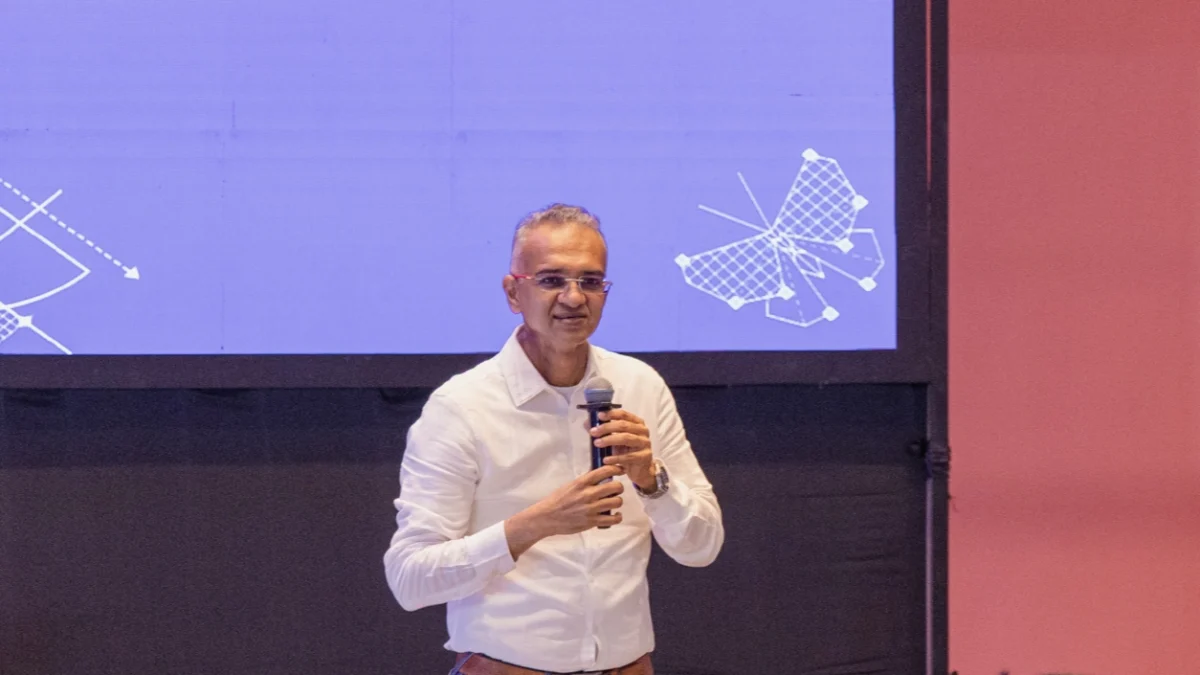
India’s digital payment ecosystem, anchored by the Unified Payment Interface (UPI), stands at a critical juncture. Having fundamentally transformed how a nation of 1.4 billion people transacts, the platform is now setting its sights on a monumental goal: scaling to over one billion daily transactions. Dilip Asbe, Managing Director and CEO of the National Payments Corporation of India (NPCI), has signaled that the next phase of this growth will not be driven by traditional infrastructure expansion alone, but by the strategic, deep-seated integration of Artificial Intelligence.
Speaking at Mumbai Tech Week (MTW) 2026, Asbe outlined a roadmap where AI serves as the backbone for user acquisition, fraud mitigation, credit distribution, and the democratization of financial services.
The Next Frontier: Scaling the Digital Economy
The UPI ecosystem currently processes over 750 million transactions daily, a testament to the success of India’s digital public infrastructure. However, as the network approaches the saturation point among the digitally literate urban population, the next half a billion users represent a different challenge. These users, residing primarily in rural or semi-urban areas, require a frictionless, intuitive, and highly secure onboarding process.
"AI will be used very effectively when we look at the next wave of UPI," Asbe noted during his keynote. "We must use AI to look at voice and multilingual solutions to make onboarding simpler for the next generation of users."
By leveraging AI, the NPCI intends to lower the barriers to entry, moving beyond text-heavy interfaces toward voice-first interactions that accommodate India’s vast linguistic diversity.
Chronology of UPI’s AI Evolution
To understand where India is heading, one must look at the progression of the NPCI’s technological adoption:
- 2016: Launch of UPI, establishing the foundation for real-time, peer-to-peer, and merchant-based payments.
- 2023: NPCI introduces "Hello UPI," a voice-assistant-based interactive system. While adoption remains in its nascent stages, it set the precedent for conversational finance.
- 2024: The NPCI spins off the BHIM UPI app as a wholly-owned subsidiary, signaling a push for greater competitiveness and internal innovation.
- 2025: Initial pilot programs for "agentic commerce" are launched in partnership with industry players like Razorpay, testing the viability of AI-led e-commerce transactions.
- 2026: Introduction of FIMI, an AI language model specifically tailored for payment dispute resolution, which has since scaled to serve over a million users.
- Late 2026 (Upcoming): Anticipated implementation of the 30% market share cap on individual payment apps, aimed at fostering a more balanced ecosystem.
Supporting Data: The Concentration Challenge
While the NPCI pushes for innovation, the market remains characterized by significant concentration. Currently, Walmart-owned PhonePe and Google Pay collectively command over 80% of the UPI market share. This duopoly has sparked intense debate regarding systemic risk and the viability of smaller, emerging players.
Asbe addressed this concern by highlighting that the lack of market diversity is not merely a technical issue but a commercial one. "The moment we see a viable commercial model being available to the ecosystem, I believe newer players will start investing very heavily," he explained.
The NPCI’s decision to move forward with the 30% market share cap—a policy that has faced several deferrals since its inception—is viewed by many as a regulatory "stick" designed to force the industry to diversify. As the December 31, 2026, deadline approaches, the pressure on the ecosystem to innovate beyond current payment rails has never been higher.
AI in Finance: Regulations and Responsibility
As India looks toward AI-powered finance, the regulatory framework remains the primary guardrail. Unlike the "move fast and break things" ethos often seen in Silicon Valley, the NPCI is emphasizing a controlled, deterministic approach to AI.
The Rise of Small Language Models (SLMs)
Asbe holds a distinct view on the utility of Large Language Models (LLMs) versus Small Language Models (SLMs). He suggests that for financial services, where precision is non-negotiable, the industry should prioritize the development of SLMs.
"We believe that the models will differentiate from each other based on the data sets that are made available to them," Asbe remarked. "There is a big opportunity for Indian companies—the banks, FinTechs, and the ecosystem—to create small language models which are sharp, specific, and as deterministic as possible."
Risk Mitigation and User Consent
The integration of AI agents—similar to the ones being piloted by global firms like Coinbase or Robinhood—requires a robust legal framework. If an AI agent executes a fraudulent transaction or makes a suboptimal financial decision, the question of liability becomes paramount. The NPCI’s stance is that any deployment of agentic commerce must be anchored in clear user instructions and verifiable consent logs, ensuring that the system can audit decisions made by autonomous agents.
Implications for the Future of Indian FinTech
The implications of the NPCI’s strategy are twofold: first, it signals a shift from "transactional" payments to "intelligent" finance; second, it reinforces India’s position as a global leader in sovereign digital infrastructure.
Fraud Prevention and Credit Distribution
One of the most immediate applications of AI, according to Asbe, is the identification of "money mules"—accounts used to facilitate the movement of illicit funds. By analyzing transactional patterns with machine learning, the NPCI hopes to detect anomalies in real-time, far more effectively than traditional rule-based systems.
Furthermore, the wealth of data generated by millions of daily UPI transactions provides a unique opportunity for credit underwriting. For the millions of small merchants and individuals currently outside the formal credit net, AI-driven analysis of their digital footprints could provide the keys to affordable, micro-credit products, effectively bridging the gap between digital payments and financial inclusion.
A Competitive Ecosystem
The push for a more competitive environment, aided by the potential market share caps and the revitalization of the BHIM app, is meant to ensure that the Indian consumer has a variety of choices. Asbe emphasized that the goal for BHIM is not necessarily to become the market leader, but to act as a "sovereign and secure" benchmark for the rest of the industry—a baseline of trust and reliability.
Conclusion: A Vision for the Future
The journey to a billion daily transactions is as much a technological challenge as it is a social one. By embracing AI—not as a gimmick, but as a utility—the NPCI is laying the groundwork for a financial system that is more secure, more inclusive, and significantly more efficient.
As India navigates the complexities of regulating AI in finance, the world will be watching. If the NPCI succeeds in creating a balanced, AI-integrated, and highly competitive payments landscape, it will set a new global standard for digital economies. The next phase of UPI will not just be about moving money; it will be about leveraging data and intelligence to empower every participant in the Indian economy, from the street-side vendor to the corporate enterprise.
For now, the focus remains on execution: refining the voice interfaces, scaling the FIMI dispute resolution system, and fostering a commercial environment where innovation is rewarded. As Asbe suggests, the tools are ready—the challenge now lies in the scale and the speed of implementation.

 Nana
Nana
 Layla Zulfa