Layla Zulfa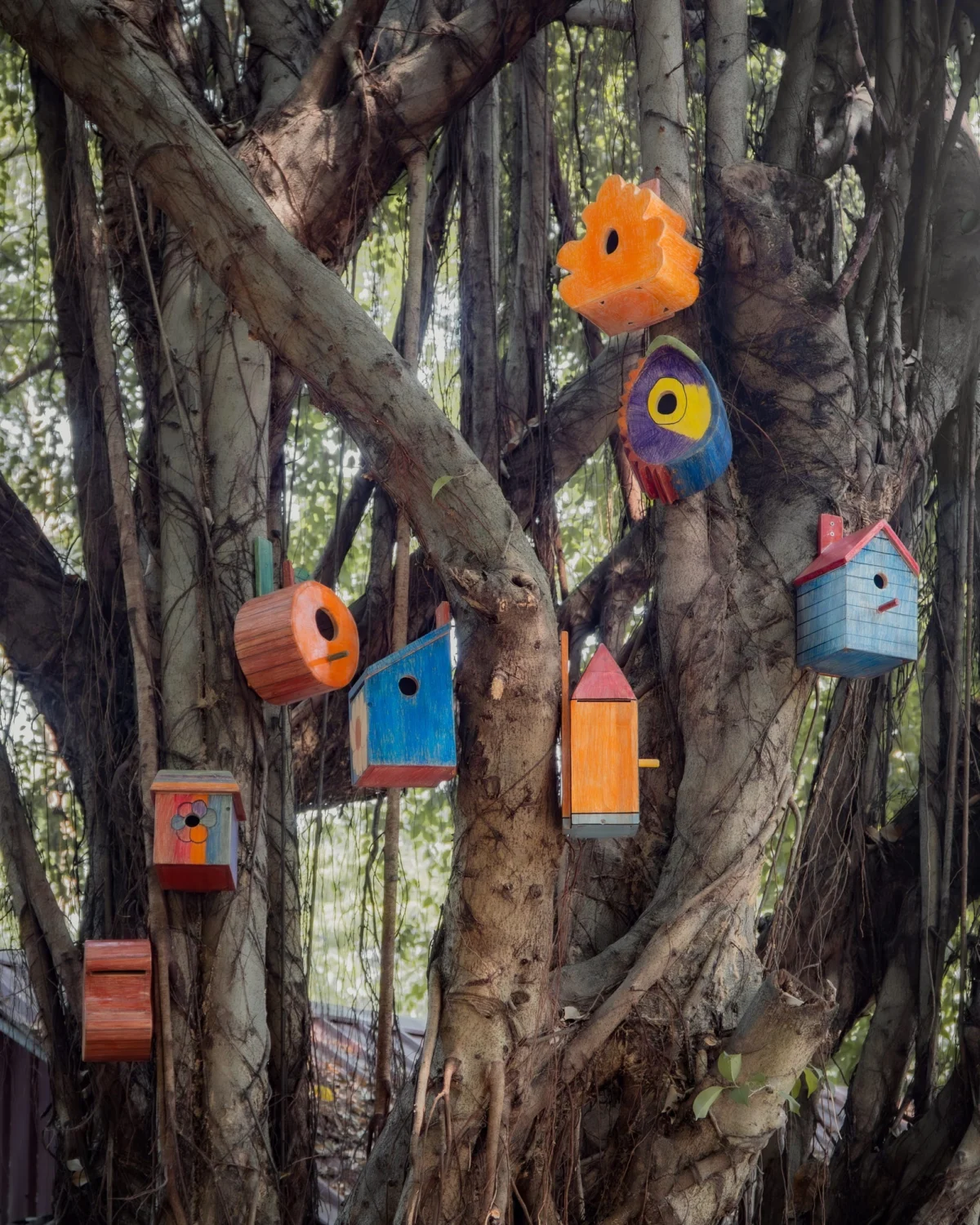
Introduction: The Adult-Centric Design Flaw
In our built environment, we often overlook a fundamental discrepancy: the world is designed for adults, by adults. For children, this manifests as a constant, subtle struggle—a reality most clearly observed in the classroom. Designer Taekhan Yun, while visiting his parents’ English school in Cambodia, witnessed this phenomenon firsthand. He watched as students shifted restlessly in their chairs, physically struggling to find comfort in furniture built to standardized, adult-sized specifications.
"It made me realize how naturally furniture and spaces are designed around adult standards, while children are often expected to adapt and conform to those environments," Yun explains. This moment of realization served as the catalyst for a transformative design philosophy. Yun decided that instead of creating better furniture for children, he would flip the script: he would invite the children to become the architects of their own functional world.

Chronology of a Creative Revolution
The project began as an experiment in participatory design, rooted in the belief that children possess an unfiltered creativity that is frequently suppressed by conventional education.
Phase 1: Observation and Empathy
Yun’s initial observations in Cambodia identified a "conformity trap." By forcing children into adult-sized ergonomics, we inadvertently signal that their comfort and physical needs are secondary. This realization moved Yun to seek a methodology that would validate the child’s perspective as the primary design constraint.

Phase 2: The Workshop Iteration
Yun developed a series of collaborative workshops designed to bridge the gap between abstract imagination and tangible reality. The process is a multi-stage journey:
- Conceptualization: Children are given colored pencils and paper to draw their "dream" chairs or birdhouses, unburdened by concerns of structural engineering or manufacturing costs.
- Tactile Prototyping: The children then translate their two-dimensional drawings into three-dimensional clay models. This phase is crucial, as it allows them to manipulate form, balance, and volume with their own hands.
- Realization: Yun acts as the master craftsman, taking the children’s sketches and clay models and faithfully transcribing them into full-scale, functional wooden objects.
Phase 3: Global Expansion
Following the success of his Cambodian pilot, Yun has begun coordinating international iterations of the project. Currently, plans are underway to host workshops in South Korea and Saudi Arabia, testing whether this design philosophy transcends cultural and geographic boundaries.

The Psychology of Unconstrained Design
Yun’s work is not merely about furniture; it is a study in creative psychology. He argues that children perceive objects through a lens of "freedom." Unlike adults, who are tethered to the functional expectations of a chair (it must have four legs, a backrest, and a specific height), children view objects as possibilities.
"Children, in particular, tend to view objects with a freedom that is less constrained by function, convention, or rules," Yun notes. By allowing them to intervene in the design process, he transforms the final result from a product into a collaborative artifact. These objects are, in many ways, an extension of the children’s developmental identity.

Supporting Data: The Impact of Participatory Design
While Yun’s work is artistic, it aligns with broader trends in environmental psychology and educational research. Participatory design in schools has been shown to increase student engagement, agency, and ownership.
- Agency and Ownership: When students participate in the design of their learning spaces, their psychological connection to that space deepens. This "ownership" leads to increased care for school property and a higher degree of comfort in the classroom.
- Cognitive Development: The shift from 2D (drawing) to 3D (clay) to real-world application (woodworking) reinforces spatial reasoning and problem-solving skills.
- Social Cohesion: The project highlights the power of communal creation. While individual chairs or birdhouses are charming, the "collection" becomes a representation of a diverse, vibrant community—a physical manifestation of the idea that individual contributions, when brought together, create a stronger whole.
Official Perspectives and Philosophy
Taekhan Yun’s evolution as a designer has been profound. He describes a shift in his own professional focus: from the "object" to the "observer."

"Working with children has gradually shifted my focus from the final objects themselves to the ways children perceive, imagine, and interpret the world around them," he says. This is a critical distinction in modern industrial design. Where traditional design seeks to solve a problem with a "perfect" solution, Yun’s methodology prioritizes the process of interpretation.
When asked about the future, Yun is ambitious. His goal is to iterate the chair project on a global scale. By collaborating with children from vastly different cultural and social backgrounds, he hopes to create a global dialogue about the built environment. He envisions a world where a child in Riyadh and a child in Cambodia can share their design languages, perhaps even influencing how architects and urban planners consider the needs of the youngest members of society.

Implications for Future Design
The implications of Yun’s work are significant for the fields of architecture, education, and social policy.
Rethinking Urban and Educational Infrastructure
If we accept that standardizing environments for children is a form of design failure, the next logical step is to advocate for "child-inclusive" architecture. This doesn’t mean building miniature cities, but rather incorporating flexible, modular, and adaptive elements that allow users to customize their environment.

The Role of the Designer as Facilitator
Yun’s role as a craftsman who executes someone else’s vision—specifically a child’s—challenges the "ego-driven" model of the artist/designer. In this framework, the designer becomes a facilitator, a technician who provides the professional expertise to realize the "unconstrained" dreams of others. This is a potent model for community-based art projects that aim to foster local pride and artistic literacy.
A Call for Global Empathy
As the project moves into the Middle East and East Asia, the data collected will provide a unique look at how different cultural values influence design. Do children in more traditional, structured societies prioritize function differently than those in more liberal, experimental environments? These questions, which Yun is uniquely positioned to answer through his workshops, will provide a rich dataset for educators and designers alike.

Conclusion: Designing for the Future
Taekhan Yun’s project is a powerful reminder that our environments are not static; they are social constructs that reflect our values. By inviting children to participate in the design process, Yun is doing more than just making beautiful wooden furniture—he is teaching the next generation that they have the power to shape their own surroundings.
As he prepares for his next series of workshops in South Korea and Saudi Arabia, the design community will be watching. The "whimsical chairs" and "dream birdhouses" serve as a challenge to the status quo. They remind us that if we want to build a better future, we must first learn to listen to the people who will inhabit it the longest: the children.

For those interested in following the progress of these workshops or seeing the evolving collection of functional artworks, more information can be found on Taekhan Yun’s Instagram. In a world that often demands we conform, Yun’s work stands as a testament to the beauty of letting children define the space they occupy.

 Asep Darmawan
 Nana Muazin