Nana Wu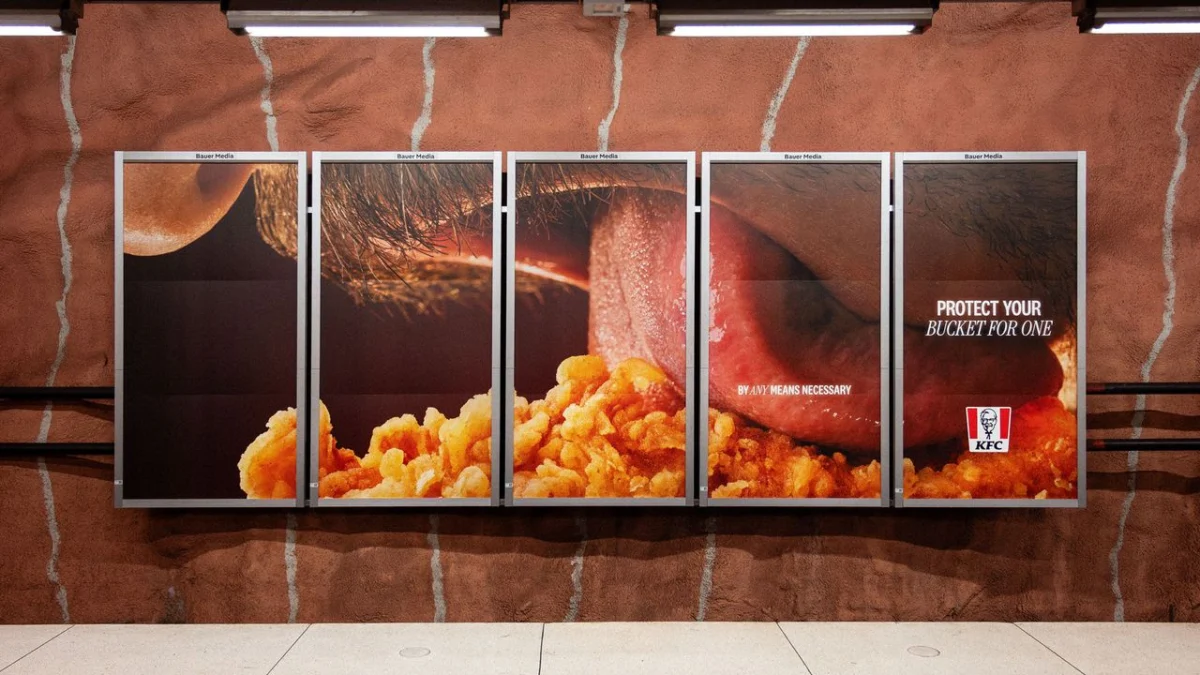
In the crowded landscape of fast-food advertising, where brands typically compete through polished aesthetics, sanitized product shots, and aspirational lifestyle imagery, KFC Sweden has taken a radical detour. Partnering with the creative agency Uncommon, the fast-food giant has launched a campaign titled "Bucket For One" that is less concerned with appetites and more concerned with psychological boundaries. By leaning into the raw, uncomfortable, and decidedly "gross" reality of food possessiveness, the campaign has triggered a global conversation about the limits of sensory marketing.
The Core Concept: A Tactical Shift in Consumer Behavior
The "Bucket For One" campaign is anchored by a simple yet bold premise: protecting one’s meal at all costs. The campaign introduces a smaller, single-serving bucket size, specifically tailored for the solo diner who has no intention of sharing their fried chicken.
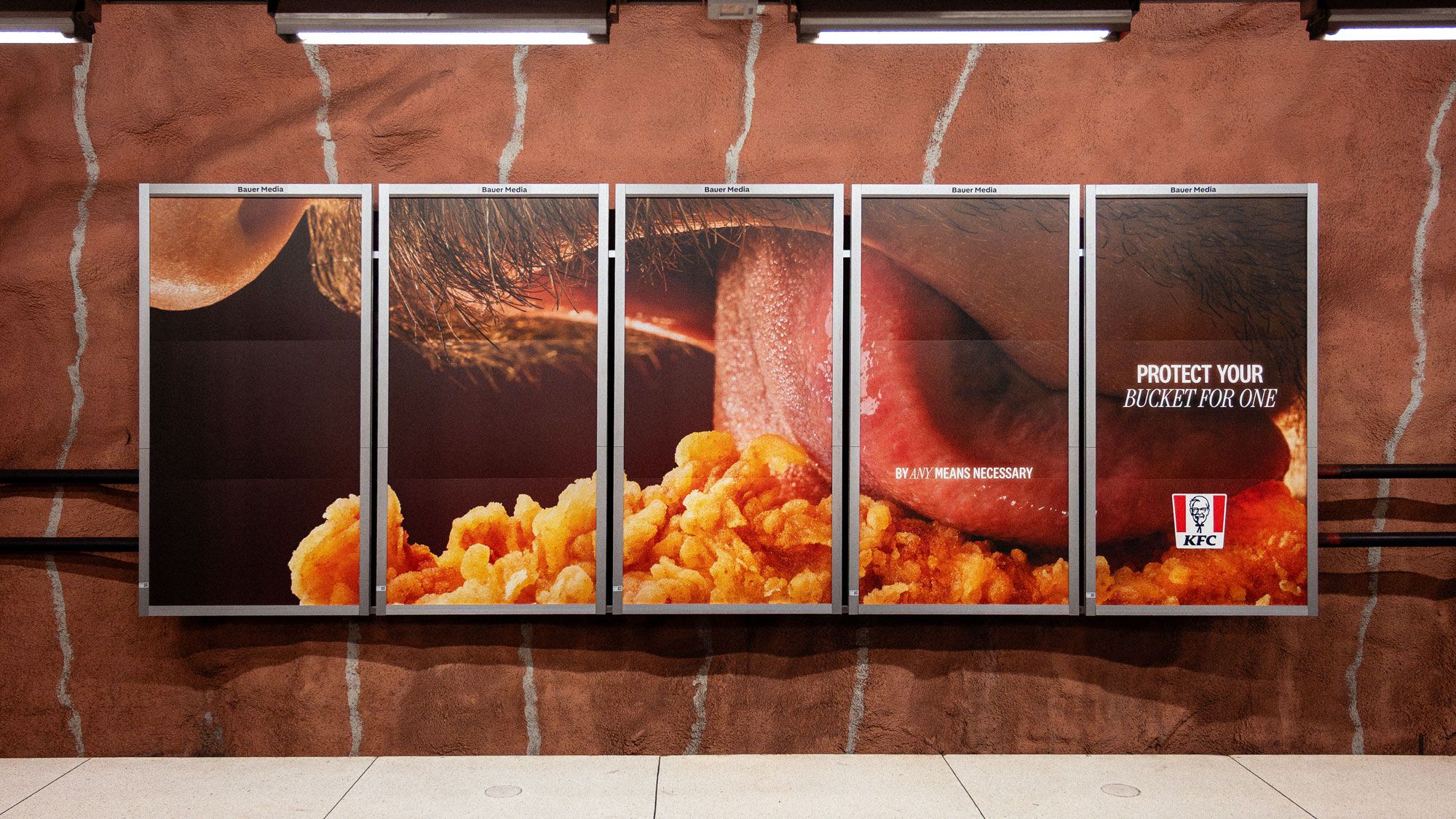
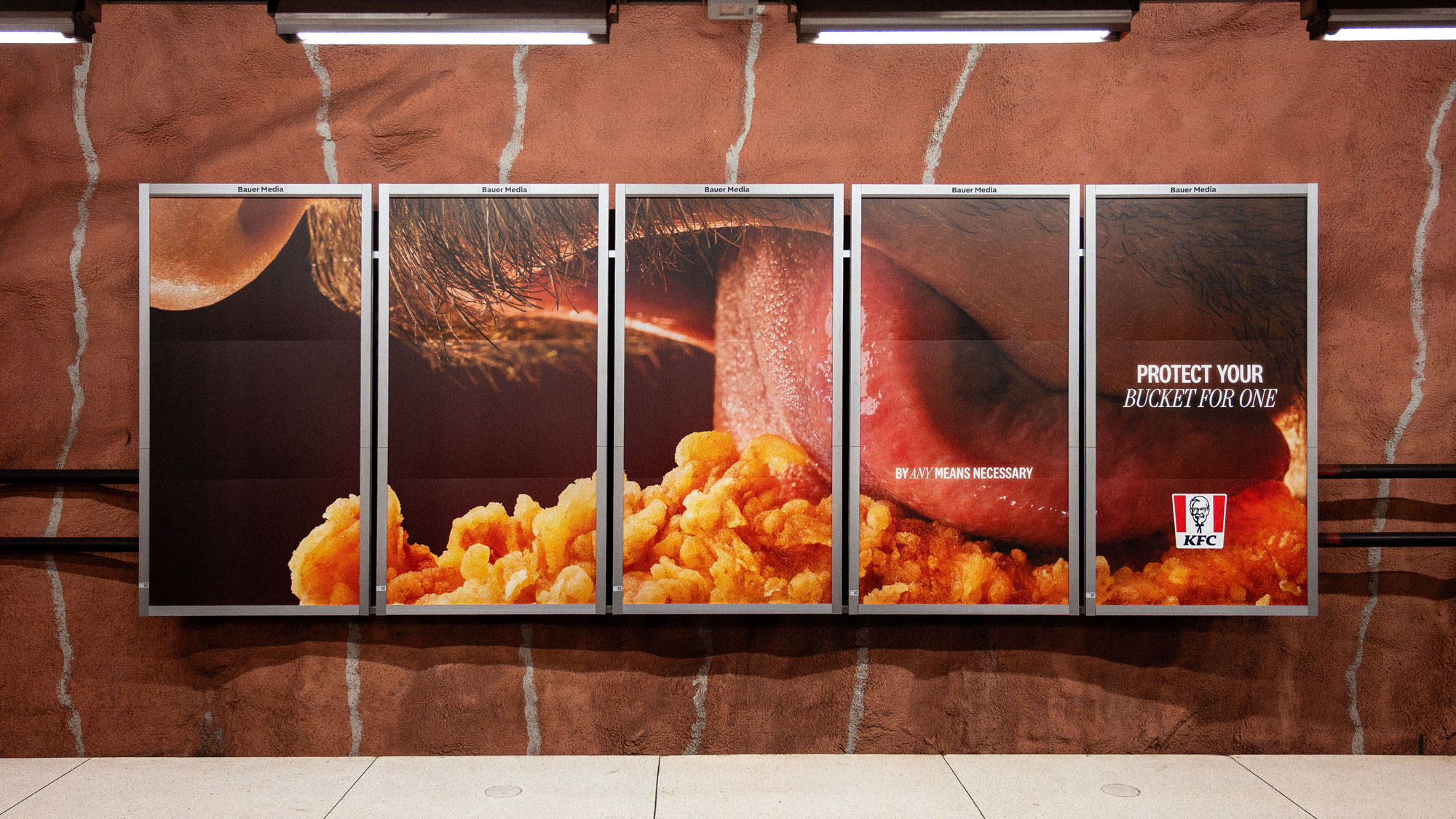
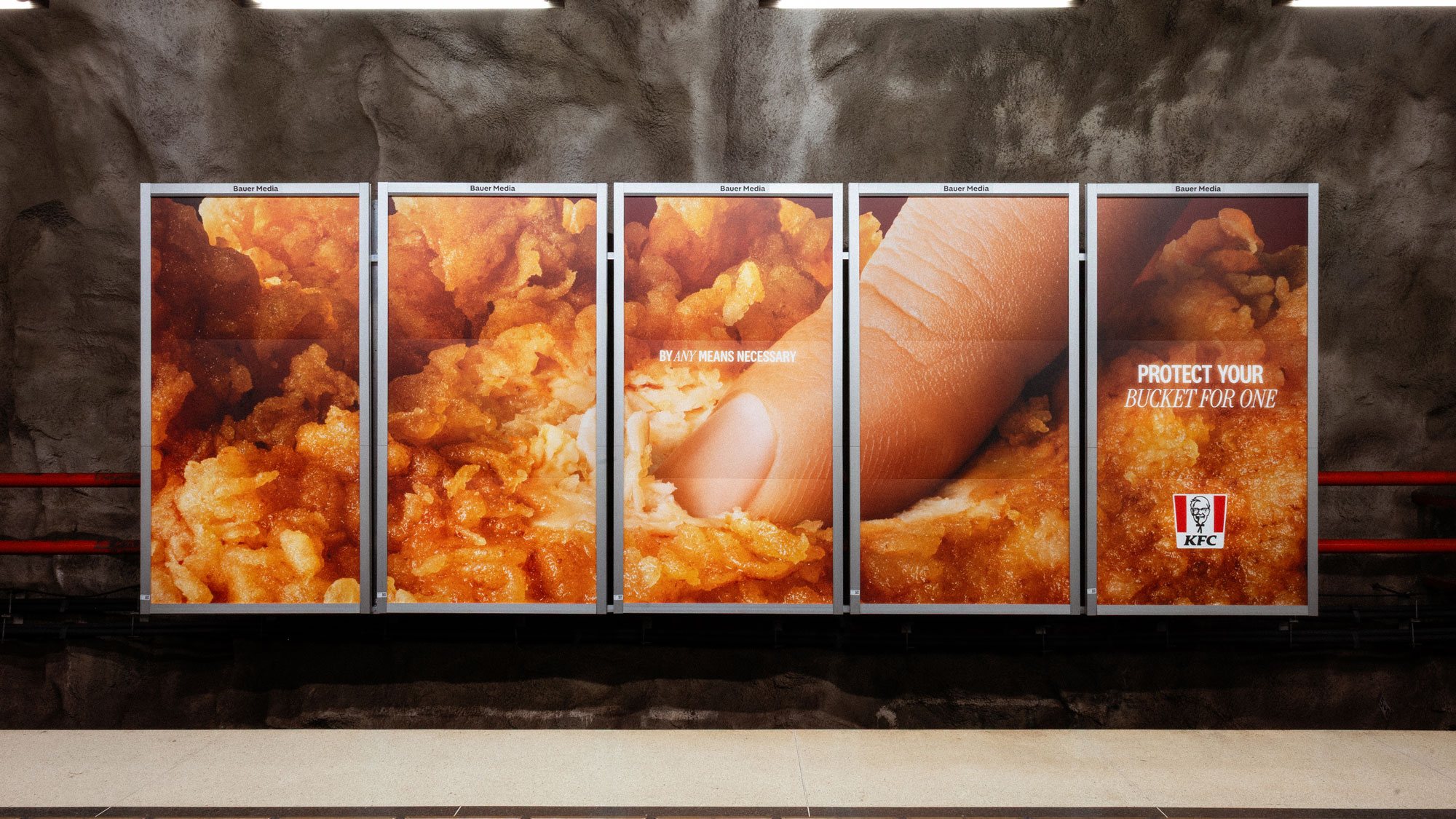
The visual execution is what truly sets this campaign apart. Rather than showing a smiling individual enjoying a meal, the advertisements—which occupy massive billboard spaces—feature extreme, hyper-realistic close-ups of human body parts interacting with the food. We are talking about tongues, fingertips, and breath, captured with such high-resolution clarity that the viewer can discern individual hairs on a mustache or the microscopic moisture of a breath.
It is a masterclass in "pleasurable disgust." The imagery is designed to make the viewer recoil, yet it is so visually striking and technically accomplished that it demands attention. By transforming the act of eating into a territorial, almost animalistic experience, the campaign effectively communicates its tagline: "Protect Your Bucket For One, By Any Means Necessary."
A Chronological Breakdown: From Insight to Impact
The journey to this campaign began with data-driven insights.
- The Discovery Phase: Research conducted by Attest revealed a compelling behavioral truth among the Swedish demographic aged 18–35. While 7 out of 10 young adults identified fried chicken as their favorite fast food, they harbored deep resentment toward sharing it. Despite this, social pressure dictated that only 9% of them would ever explicitly say "no" to a friend asking for a bite.
- The Creative Synthesis: Recognizing this tension between desire and politeness, the creative team at Uncommon Stockholm sought a way to give customers "permission to be selfish."
- The Production Phase: Photographer Pål Allan was brought on board to execute the vision. His work with macro-lens photography was pivotal in creating the "unpalatable and ridiculous" aesthetic. The goal was not to make the chicken look delicious, but to make the act of keeping it look absolute.
- The Launch: Starting June 1, the campaign began rolling out across Sweden, spanning digital, social, and massive outdoor billboard placements that magnify the discomfort to an unavoidable scale.
Supporting Data and Psychological Underpinnings
Why does this campaign work so effectively? It taps into a primal psychological trigger: territoriality.
In marketing, we are accustomed to the "social eating" trope—the idea that food brings people together. By actively subverting this, KFC is speaking to a segment of the population that feels the "sharing tax" on their fast-food experience is an unfair burden.
The statistics provided by the Attest survey underscore a fundamental shift in consumer identity. The modern diner, particularly the Gen Z and Millennial demographic, is increasingly protective of their personal time and resources. The "Bucket For One" acts as a physical manifestation of boundaries. By using imagery that is "too close for comfort," the brand is mirroring the internal anxiety of having someone reach for your plate—a feeling that is universally understood, even if it is rarely discussed in polite society.
Official Responses and Agency Strategy
The leadership at KFC Sweden and the creative minds at Uncommon view this project as a milestone in brand positioning.
"KFC Sweden has spent more than a decade bringing people together over a shared bucket," says Axel Ericsson, Brand Manager at KFC Sweden. "But sometimes you just want it all to yourself. With the launch of Bucket For One, we wanted to give Swedes permission to be selfish. Every last bite of tasty fried chicken should be yours in a bucket that’s made for one."
The agency behind the work, Uncommon, views this as a necessary evolution for a global brand. Teodor Nisbel Fjäll, a Creative at Uncommon Stockholm, notes, "We wanted to depict the raw truth about how far people could go to keep their food to themselves. The imagery is uncomfortable, beautifully executed, and absurdly honest."
Björn Ståhl, Chief Creative Officer at Uncommon Stockholm, adds, "This is exactly the kind of work and creative partnership we thrive on. Bold ideas that pick a fight with conventions to push known, loved brands like KFC into new territories that are impossible to ignore."
Implications for the Future of Advertising
The success of "Bucket For One" raises important questions about the future of visual communication in the food and beverage industry.
1. The Death of the "Polished" Ad
For years, the industry has relied on food styling that makes meals look like perfect, static objects. This campaign suggests that consumers are suffering from "perfection fatigue." By showing the messy, human, and slightly gross reality of eating, KFC has achieved a level of authenticity that standard studio photography cannot touch.
2. The Power of "Visceral" Marketing
Advertisers have long known that disgust is a powerful emotion, but it is rarely used in food marketing because of the fear of appetite suppression. However, KFC has successfully leveraged disgust to highlight a social pain point. The "disgust" isn’t aimed at the chicken; it is aimed at the hypothetical intruder trying to steal the chicken. This distinction is vital—it keeps the product desirable while the behavior is what feels repulsive.
3. The Rise of "Bold" Brand Partnerships
Uncommon’s reputation for challenging status quos is well-documented—their recent identity work for OFFF Barcelona, which utilized imagery "harvested" from human bodies, shares a similar DNA with this KFC campaign. These projects suggest a trend toward hyper-specific, challenging, and even polarizing creative work that prioritizes cultural relevance over broad-spectrum appeal.
Conclusion: A New Standard for Fast Food
"Bucket For One" is not just an advertisement for a new box size; it is a cultural intervention. By daring to be "stunningly gross," KFC Sweden has managed to cut through the noise of modern media.
In a world where digital feeds are saturated with filtered, overly-curated content, the sheer audacity of a macro-shot of a tongue or a mustache hovering over a piece of fried chicken is a shock to the system. It forces the viewer to stop, look, and react.
Ultimately, the brilliance of this campaign lies in its honesty. It acknowledges that, deep down, we aren’t always looking to share. We are often just looking for a moment of indulgence, undisturbed and unburdened by social etiquette. By validating that desire with such uncompromising visual flair, KFC hasn’t just sold more chicken—they have staked a claim as a brand that understands the unfiltered reality of the modern consumer. Whether or not this aesthetic will be adopted by other global brands remains to be seen, but one thing is certain: the era of the "polite" food advertisement is officially under fire.


 Azzam Bilal Chamdy
 Pevita Pearce