

Stanley Plotkin, a man whose life’s work has arguably saved more lives than almost any other individual in history, recently offered a somber reflection. At 93, the “Godfather of Vaccines”—the mind behind the rubella vaccine and dozens of other lifesaving immunizations—admitted to a profound sense of disillusionment. “I’m beginning to regret having lived so long,” he noted, “because we’re going downhill.”
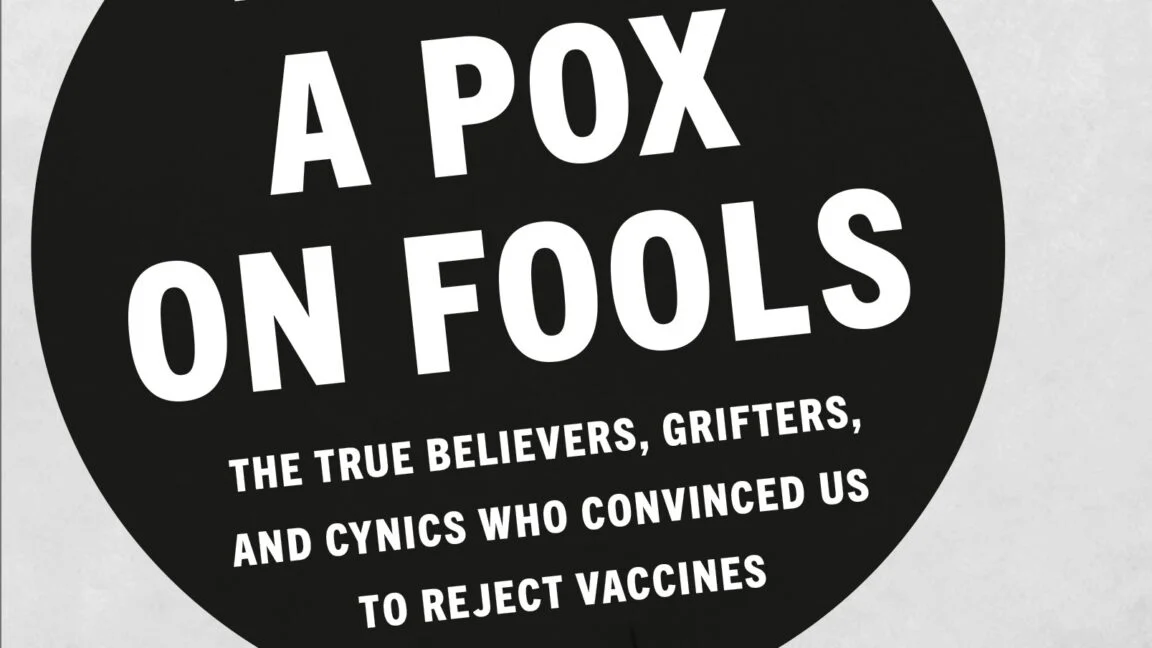
For those in the scientific community, Plotkin’s sentiment resonates as a gut-wrenching observation of the current era. We live in a time where the fruits of modern medicine are at their zenith, yet public trust in the mechanisms that secure that health is at a nadir. However, a new book by Thomas Levenson, A Pox on Fools: The True Believers, Grifters, and Cynics Who Convinced Us to Reject Vaccines, suggests that this decline is not a modern anomaly, but a recurring, deep-seated feature of human society.
The Architecture of Opposition: A Taxonomy of Denial
Levenson, who directs the Graduate Program in Science Writing at MIT, provides a vital service in A Pox on Fools by categorizing the anti-vaccine movement into three distinct psychological and political archetypes: the True Believers, the Grifters, and the Cynics.
These categories serve as a lens through which we can view the history of vaccine rejection, revealing that the arguments being deployed on social media today are not novel. They are echoes of a debate that has raged since the early 18th century. By deconstructing these arguments into the “Wrong,” the “Bad,” and the “Intolerable,” Levenson illustrates how a coalition of ideological purity, misinformation, and political polarization has sustained a multi-century war against public health.
A Chronology of Conflict: From Smallpox to the Present
The history of vaccine skepticism is as old as the practice of inoculation itself. To understand why opposition persists, one must look at the inception of the practice.
The 18th Century: The Moral Panic
In the early 1700s, long before the germ theory of disease was codified, infectious disease was the leading cause of human mortality. In the 19th century, roughly 40 percent of children died of infection before their fifth birthday. The "average" lifespan of the era was not an indicator of how long adults lived, but rather a statistical tragedy skewed by the staggering number of child-sized coffins buried every year.
When Lady Mary Wortley Montagu and Cotton Mather championed the practice of variolation—inoculating individuals with pus from smallpox patients to induce immunity—they were met with immediate, fierce backlash. The primary argument was not biological, but theological: disease was viewed as divine providence. To artificially alter the course of an illness was to engage in blasphemy and hubris. By attempting to thwart "God’s will," critics argued, humanity was tempting fate.
The 19th Century: The Rise of Naturalism
As the 19th century progressed, the theological arguments began to shift into the secular realm of Romanticism and Transcendentalism. The "Divine" was replaced by "Nature." The argument remained fundamentally the same: vaccines were an affront to the natural order. This transition birthed the modern wellness-industrial complex’s obsession with purity. The underlying moral judgment persisted: if you became sick, it was a failure of your own lifestyle, diet, or "purity."
Supporting Data: The Illusion of Safety
A central pillar of the anti-vaccine argument is the claim that vaccines are "unnecessary" or "actively harmful." This argument is paradoxically successful because of the very success of the vaccines themselves.
When a disease is eradicated or significantly suppressed—such as polio, measles, or smallpox—the perceived threat of the disease vanishes from the public consciousness. In the pre-vaccine era, the horror of infectious disease was visible in every neighborhood. Today, the negative side effects of a vaccine—a sore arm or a momentary fever—are visceral and immediate, while the absence of a child’s death is a "non-event."
Critics, including figures like Robert F. Kennedy Jr., have leveraged this psychological gap, framing the rare risks of immunization as an indictment of the entire enterprise. They ignore the foundational data of immunology: vaccines are not risk-free, but they are statistically safer than the diseases they prevent. Furthermore, when healthy individuals refuse vaccines, they compromise herd immunity, effectively putting the most vulnerable members of society—the immunocompromised, the elderly, and infants—in direct peril.
Official Responses and the Legal Battleground
The conflict between individual autonomy and the collective good was settled in the United States courts over a century ago. The 1905 Supreme Court case Jacobson v. Massachusetts remains the bedrock of public health law.
When Henning Jacobson challenged a mandatory smallpox vaccination law in Cambridge, Massachusetts, arguing that it violated his "inherent right" to control his own body, the Court disagreed. Associate Justice John Marshall Harlan’s majority opinion famously stated: "Liberty itself, the greatest of all rights, is not unrestricted license to act according to one’s own will."
The court established that in a civilized society, individual liberty is not absolute when its exercise threatens the life and health of others. This ruling confirmed that the state has a legitimate interest in safeguarding the public through mandates. Despite this legal clarity, the philosophical argument—the idea that the government has no right to mandate medical intervention—remains the most potent and "intolerable" hurdle for public health officials today.
Implications: The New Political Landscape
Perhaps the most significant change in the trajectory of vaccine skepticism is its recent alignment with partisan politics. For centuries, anti-vaccine sentiment was an equal-opportunity plague, appearing across various ideological spectra. However, in the wake of the COVID-19 pandemic, this has shifted.
Levenson’s research highlights a startling trend: from 2021 onward, vaccine skepticism became a core tenet of American Republican identity. The implications of this are not merely abstract; they are measured in mortality. Data consistently shows that being a Republican in the U.S. has become a measurable risk factor for illness and death, as the refusal to vaccinate has transformed from a fringe health belief into a badge of political belonging.
This transition has made the discourse nearly impossible to navigate using traditional scientific methods. When a public health measure is coded as a partisan attack, facts, figures, and peer-reviewed studies cease to function as persuasive tools. They are dismissed as "propaganda" from the "other side."
The Path Forward: Can Solidarity Be Restored?
The tragedy highlighted by Plotkin and detailed by Levenson is not that we lack the science to protect ourselves; we have never had better tools. The tragedy is that we lack the social solidarity to use them.
The only remaining avenue for addressing the modern vaccine crisis is not through the raw data of immunology, but through an appeal to the social contract. It requires a societal shift that prioritizes the obligations we have to our neighbors over the performative assertion of individual rights.
As Levenson concludes, there is a profound, lingering anguish in watching a society turn its back on the hard-won victories of medical science. We are, in effect, choosing to re-enter a world that our ancestors fought for centuries to escape. A Pox on Fools serves as a sobering reminder that while the science of vaccines is settled, the human struggle to accept them is an ongoing, and currently failing, endeavor. If we are to reverse the "downhill" slide that Plotkin fears, we must recognize that the fight is not against a pathogen, but against a persistent, irrational, and increasingly partisan skepticism that has been with us since the first cut was made into the human arm.












No comments yet. Be the first to join the conversation!