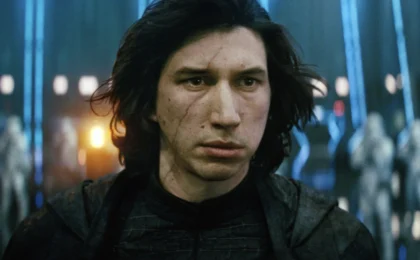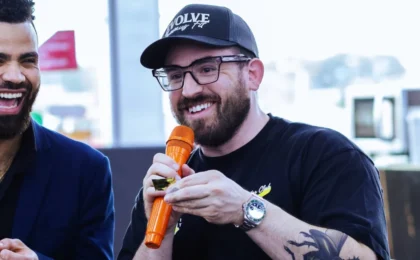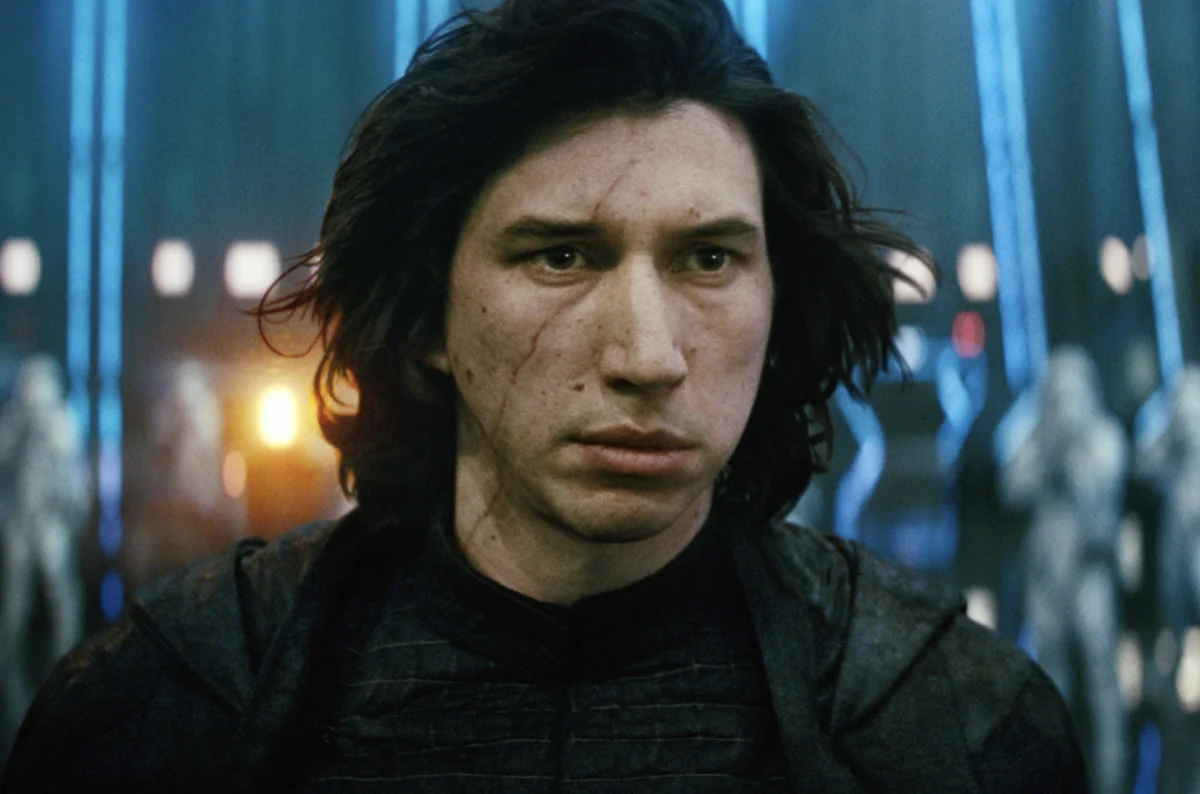
For legions of Star Wars enthusiasts, the journey of Ben Solo—the tortured, complex antagonist-turned-redeemer known as Kylo Ren—remains one of the most compelling arcs in the sequel trilogy. However, the actor behind the mask, Adam Driver, has effectively extinguished any remaining embers of hope regarding a potential return to a galaxy far, far away. In a candid and definitive interview on The Rich Eisen Show, Driver signaled that his time as the master of the Knights of Ren has reached its absolute conclusion, effectively burying a high-profile, fan-backed project that never made it off the ground.
The Finality of the Force: Driver’s Stance
During his recent appearance on The Rich Eisen Show, host Rich Eisen pressed the Academy Award-nominated actor on whether he would ever consider reprising his role. Driver’s response was characteristically blunt and devoid of ambiguity.
“Yeah, it’s over,” Driver stated flatly. “No more Star Wars.”
The actor’s tone reflected a sense of resignation, clarifying that the decision was not one he made lightly, nor one he had the power to reverse. While many actors in major franchises often leave the door ajar for "never-say-never" scenarios, Driver appears to have accepted the finality of the character’s death in The Rise of Skywalker. The conversation quickly pivoted to the most significant revelation of the year for the Star Wars fandom: the existence of a secret, abandoned screenplay that could have brought the character back in a standalone capacity.
A Chronology of the Lost Project
The story of the "lost" Kylo Ren movie is a tale of creative ambition clashing with the rigid narrative roadmap of Disney’s Lucasfilm.
The Creative Genesis
The project was not merely a rumor; it was a well-developed, earnest effort spearheaded by Adam Driver and acclaimed filmmaker Steven Soderbergh. According to Driver, the project involved a high-caliber team of writers, including Scott Burns and Rebecca Blunt. The group spent years meticulously crafting a script that aimed to explore the psyche of Ben Solo in the wake of the sequel trilogy’s events.
The Pitch to Lucasfilm
Driver revealed that the creative team took their pitch directly to the powers that be at Disney, specifically Disney CEO Bob Iger and studio executive Alan Bergman. The pitch was received with an acknowledgement of the script’s quality—Lucasfilm brass reportedly "loved the idea" and understood the narrative angle. However, the logistical hurdle proved insurmountable. Despite the enthusiasm for the concept, Iger and Bergman were reportedly unwilling to explore a story centered on a character whose canonical demise had been established on screen.
The Fan Uprising
News of the rejected project triggered a visceral reaction from the Star Wars community. The fervor reached its peak when fans pooled resources to organize a bold, real-world campaign. In a display of dedication that surprised even the star himself, a group of fans commissioned a plane to fly a banner over the Walt Disney Studios lot in Burbank, California. The message was clear: "Save The Hunt for Ben Solo."
Driver admitted to being stunned by the scale of the response. "I didn’t expect that it was going to be billboards and people flying planes over Disney and things like that," he remarked. "That was pretty cool."
The Creative Vision: Why the Film Mattered
To understand the disappointment surrounding the cancellation of this project, one must look at the unique creative partnership between Adam Driver and Steven Soderbergh. Soderbergh, known for his experimental and grounded approach to filmmaking, would have provided a starkly different aesthetic than the traditional blockbuster template of the Star Wars franchise.
Driver noted that the team worked "really and earnestly" for several years on the script. The goal was to provide a deeper, perhaps darker, character study that transcended the standard space opera tropes. While the plot details remain under wraps, the fact that such high-level talent was invested in the project suggests it was envisioned as a "prestige" Star Wars film—one that would have prioritized character development over world-building spectacle.
Soderbergh himself, in an interview conducted in April, echoed Driver’s sentiments, noting that the window for the project had effectively closed. His phrasing suggested a sense of finality, stating, "If it was gonna happen, it would have happened."
Implications for Lucasfilm and the Future of Star Wars
The rejection of the Driver-Soderbergh pitch offers a rare window into the internal decision-making process at Lucasfilm under the stewardship of Bob Iger and the current executive team.
The Canon Conundrum
Disney’s refusal to greenlight the project highlights a significant challenge for the Star Wars brand: the tension between canon preservation and fan demand. By adhering strictly to the events of The Rise of Skywalker, where Ben Solo died and disappeared into the Force, the studio is signaling that they are hesitant to engage in "resurrection" narratives, even when backed by the original lead actors.
The "Auteur" Struggle
This episode raises questions about the role of auteur filmmakers within the Star Wars ecosystem. Lucasfilm has often struggled to balance its collaborative, producer-driven culture with the individual visions of independent directors. The fact that an actor of Driver’s stature and a director of Soderbergh’s prestige could not push a project through the pipeline suggests that the studio is currently prioritizing franchise cohesion over individual creative experiments.
The Power of Fandom
The "Save The Hunt for Ben Solo" campaign, while unsuccessful, serves as a testament to the enduring influence of the Star Wars audience. It proves that the fandom is not merely a passive consumer base but an active, organized entity capable of influencing industry conversation. While Disney may have said no to this specific project, the intensity of the pushback ensures that the character of Kylo Ren will remain a subject of debate and demand for years to come.
Conclusion: The Ship Has Sailed
As the dust settles on this chapter, it is clear that the dream of a Kylo Ren standalone film is effectively over. Adam Driver’s comments during his appearance on The Rich Eisen Show serve as the final word. He acknowledged the passion of the fans, expressed pride in the work he and his collaborators put into the script, and ultimately accepted that the decision was out of his hands.
For the Star Wars franchise, the focus now shifts toward future projects, including the upcoming slate of theatrical releases and Disney+ content. Whether those projects will be able to capture the same raw, emotional intensity that Driver brought to the role of Ben Solo remains to be seen. As for the "Hunt for Ben Solo," it will remain one of the great "what-ifs" in modern Hollywood—a compelling script that was "really good," "awesome," and "really cool," but one that ultimately could not overcome the immovable wall of franchise continuity.
The ship, as Driver so aptly put it, has indeed sailed. Yet, for the thousands of fans who looked up at the sky in Burbank to demand a different fate for their favorite character, the legacy of that attempt is its own kind of victory—a reminder that in the galaxy of storytelling, the audience’s voice is a force that cannot be entirely ignored.