

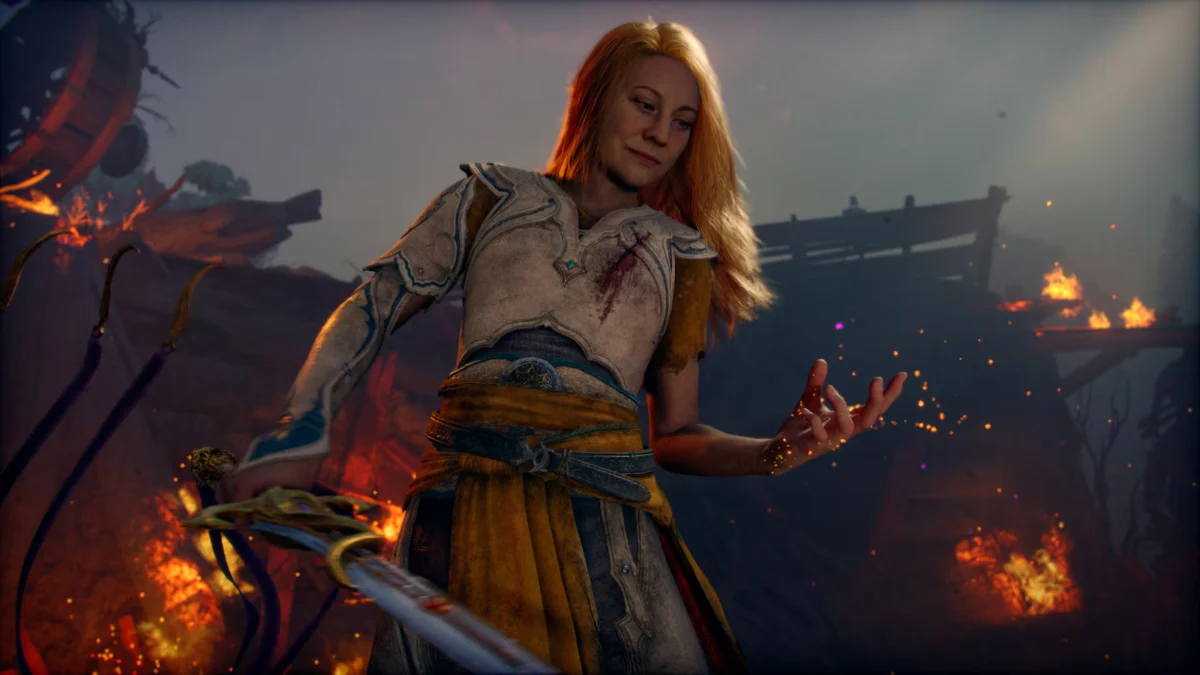
In a stunning revelation that has sent shockwaves through the gaming community, Sony Interactive Entertainment and Santa Monica Studio have officially unveiled the next chapter in the storied God of War franchise. During the highly anticipated PlayStation State of Play event on June 2, 2026, the developer pulled the curtain back on God of War: Laufey, a title that promises to shift the perspective of the series in a way fans have only ever dreamed of.
Four years after the climactic conclusion of God of War: Ragnarök, the franchise is returning—not with the Spartan rage of Kratos, but with the calculated, ethereal grace of his late wife, Laufey the Just. As the industry digests the first 20 minutes of gameplay footage revealed during the broadcast, it is clear that Santa Monica Studio is not merely iterating on the Norse saga; they are expanding the pantheon of the series into uncharted, mythological territory.
A Chronology of the God of War Evolution
To understand the weight of the Laufey announcement, one must look at the trajectory of the franchise over the last two decades. Since its inception in 2005, the series has served as a brutal, operatic exploration of vengeance, redemption, and the burdens of fatherhood.
- 2005–2010 (The Greek Era): The series defined the hack-and-slash genre, focusing on Kratos’s dismantling of the Olympian pantheon.
- 2018 (The Norse Soft-Reboot): Santa Monica Studio transitioned the franchise into a more intimate, narrative-driven experience, introducing Atreus and the character of Faye (Laufey) as the emotional catalyst for the story.
- 2022 (God of War: Ragnarök): The Norse saga reached its zenith, leaving the fate of the realms decided but the world in a state of precarious reconstruction.
- 2026 (The Announcement of Laufey): The franchise pivots to a "sequel-prequel" hybrid, exploring the afterlife and the legacy of the Giantess who set the entire Norse saga in motion.
The transition from Kratos to Faye marks the most significant mechanical and narrative shift in the history of the series. By stepping into the shoes of a character previously relegated to memories and flashbacks, players are promised a perspective that is fundamentally different from the "Ghost of Sparta."
The Everywhen: A New Mythological Frontier
The most gripping aspect of the Laufey announcement is the confirmed departure from the familiar frozen landscapes of Midgard. The official PlayStation store listing describes a setting known as "The Everywhen," a metaphysical afterlife where gods from disparate mythologies converge.
The trailer provided a tantalizing glimpse of this realm. Most notably, it featured an interaction between Faye and Sekhmet, the Egyptian goddess of war, plague, and healing. This confirmation of Egyptian mythology—a setting fans have clamored for since the series reboot—signals that Santa Monica Studio is moving toward an "interconnected mythology" model.
Gameplay Mechanics: Swordplay and Strategy
Unlike Kratos, who relies on the brute force of the Leviathan Axe and the Blades of Chaos, the footage of Laufey showcases a more agile, precision-based combat style. Wielding a slender, crystalline sword, Faye’s movements are fluid, almost dance-like. The trailer highlighted:
- Labyrinthine Traversal: Faye is seen navigating complex, shifting environments that require spatial awareness and puzzle-solving rather than raw strength.
- Magical Aptitude: Unlike Kratos, whose magic is often tied to his equipment, Faye appears to command innate elemental forces, hinting at a skill tree focused on illusion and area-of-effect crowd control.
- Verticality: The combat system seems to incorporate greater verticality, allowing Faye to engage enemies in mid-air—a departure from the grounded, weighted combat of the last two titles.
Official Responses and Narrative Context
In a brief statement following the State of Play, Cory Barlog and the leadership team at Santa Monica Studio expressed their excitement about exploring the "untold side" of the Norse arc.
"Laufey was always the architect of her own destiny," the developers noted. "By placing the player in her role, we are exploring the cost of the choices that led to the events of 2018. We wanted to show that even in death, her influence on the realms was not finished."
The official synopsis offers a compelling hook: “Death was supposed to be the end, but for Laufey (Faye), warrior and wife to Kratos, a new adventure is just beginning. Awakening unexpectedly in a strange land after her death, Faye discovers the plans she put in place to protect Kratos and Atreus in her absence are now at risk.”
This framing creates a high-stakes narrative. Faye is not fighting for personal glory; she is fighting as a guardian, ensuring that the legacy she left for her husband and son remains secure. It creates an ironic dynamic where the player, controlling the "protector," must navigate an afterlife that threatens to unravel the peace Kratos fought so hard to establish.
Implications for the Franchise and the Industry
The announcement of God of War: Laufey carries significant implications for both the PlayStation brand and the broader landscape of AAA gaming.
1. The Death of the "Single Protagonist" Model
For twenty years, God of War was synonymous with Kratos. By shifting the protagonist, Sony is proving that their flagship IPs can evolve into "universes" rather than being tethered to a single character. This mirrors the success of other franchises that have successfully rotated leads while maintaining a consistent thematic core.
2. Mythological Crossover
The inclusion of Sekhmet confirms that the God of War universe is not limited by geography or specific cultural lore. The concept of "The Everywhen" allows the developers to introduce gods from Aztec, Mesopotamian, or Japanese pantheons without needing to create an entirely new franchise for each. It is a brilliant way to future-proof the series.
3. The Amazon Series Connection
The industry is currently watching the progress of the live-action God of War Amazon series, currently filming in British Columbia. With Laufey now in production, there is rampant speculation regarding whether the game and the show will share a cohesive, multi-platform narrative. While Sony has kept details regarding the show’s plot under wraps, the timing of the Laufey announcement suggests a coordinated strategy to keep the brand at the forefront of the cultural zeitgeist.
Supporting Data: The Technical Leap
While the game does not yet have a release date, the 20 minutes of footage shown at the State of Play highlights the technical capabilities of the PlayStation 5 (and presumably the rumored "Pro" iterations).
- Load Times: The seamless transitions between the labyrinthine environments suggest that Santa Monica is pushing the limits of the PS5’s SSD technology.
- Asset Density: The Egyptian-inspired architecture in the trailer features a level of detail—from the hieroglyphic carvings to the atmospheric sand particles—that sets a new benchmark for visual fidelity in the franchise.
- Audio Design: Bear McCreary’s return to the composer’s chair is implied, with the score moving from the heavy, percussive Norse drums to more exotic, woodwind-heavy melodies that evoke the heat and mysticism of the Egyptian afterlife.
Conclusion: A Legacy Reborn
God of War: Laufey is more than just a spin-off; it is a fundamental expansion of the God of War mythology. By centering the story on Faye, the developers have successfully flipped the script on the series’ established tropes. We are no longer playing as the god-killer seeking redemption; we are playing as the tactician who manipulated the gods themselves to protect her family.
As the gaming community awaits further updates—specifically a firm release window—the buzz surrounding the title is palpable. Whether it serves as a bridge to a new, non-Norse trilogy or a standalone masterpiece, God of War: Laufey is poised to be the defining title of this console generation.
For now, the world of the giants and the gods of the Nile await. If the last two decades of God of War have taught us anything, it is that in the world of Santa Monica Studio, death is rarely the end—it is merely the beginning of the next great war.











No comments yet. Be the first to join the conversation!