Dwi Wanna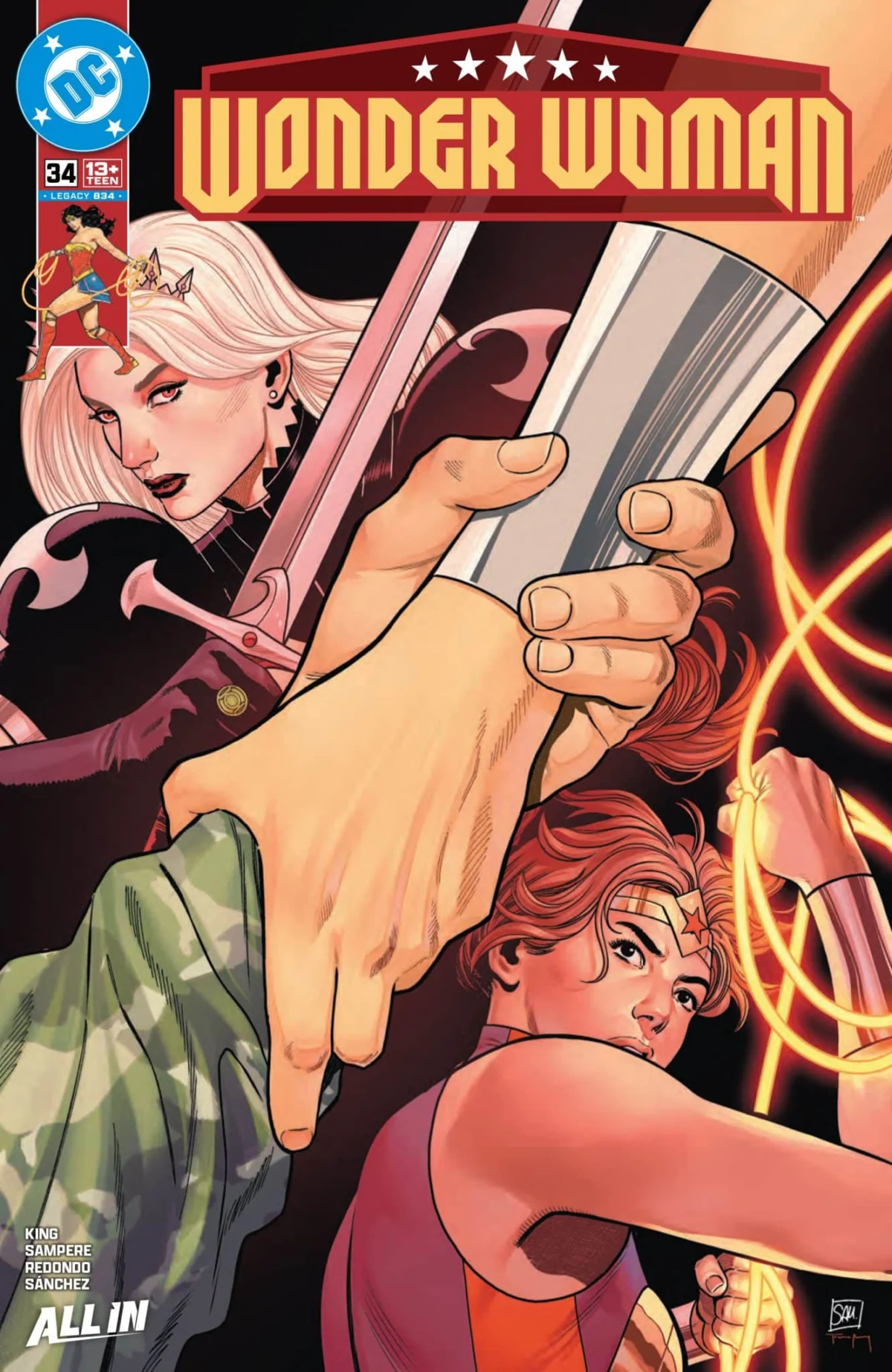
By the Graphic Policy Editorial Team
June 20, 2026
The landscape of the DC Universe is currently shifting under the weight of an epic conflict that threatens to reshape the mythology of its most iconic heroine. With the release of Wonder Woman #34, writer Tom King, supported by the artistic prowess of Daniel Sampere and Bruno Redondo, brings the first act of "The Wonder War" to a thunderous, high-stakes conclusion. As the narrative threads tighten, the fate of Diana Prince, her family, and the very fabric of the world hangs in the balance.
The Main Facts: A Culmination of Conflict
Wonder Woman #34 serves as the climactic point for the initial arc of "The Wonder War." At its core, the story centers on the reunion between Diana and Steve Trevor—a moment intended to be a beacon of hope in an otherwise chaotic series of events. However, that joy is short-lived as the antagonist known as "The Matriarch" launches a calculated strike aimed directly at the heart of the Amazonian warrior.
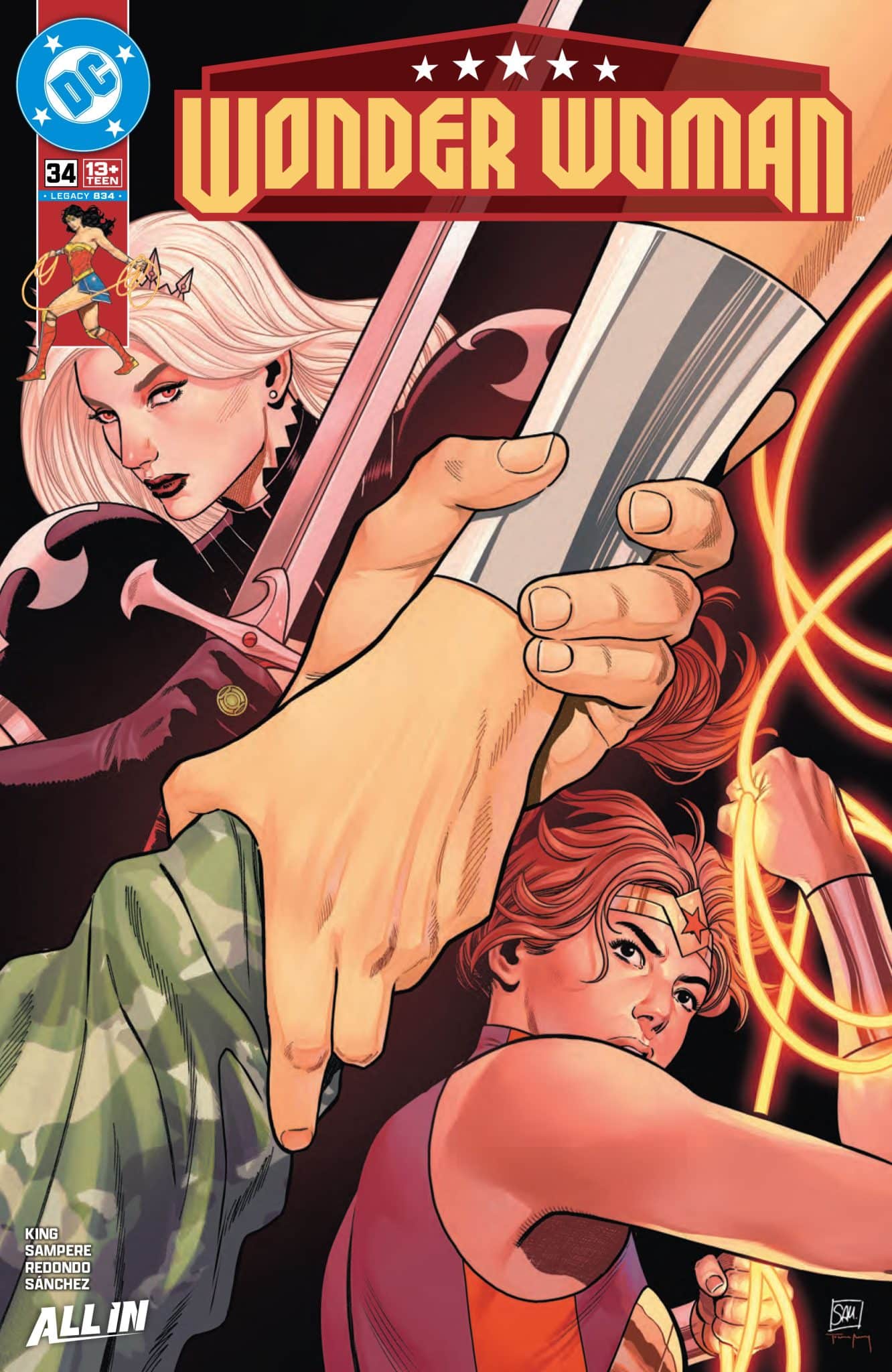
The central conflict is not merely physical; it is an existential threat. The Matriarch’s objective is the total destruction of Wonder Woman, and she has mobilized resources that challenge Diana’s status as a paragon of peace and justice. The issue also highlights the pivotal role of Trinity, Diana’s successor, who finds herself thrust into the middle of this escalating crisis. The core question posed by this issue—can a daughter save her parents while the world burns around them?—serves as the primary engine for the narrative tension that defines this installment.
A Chronology of the Crisis
To understand the gravity of Wonder Woman #34, one must look at the progression of the series throughout 2026.
- The Build-Up: The initial stages of Tom King’s run established a world where the lines between political power and mythological warfare were increasingly blurred.
- The Emergence of the Matriarch: The Matriarch’s introduction shifted the tone from standard superhero fare to a more grounded, high-stakes thriller, where the collateral damage of gods is measured in human lives.
- The Mid-Arc Tension: Issues #30 through #33 saw the gradual isolation of Diana, stripping away her allies and forcing her into a corner where her only path forward was a direct confrontation with an enemy who understands her psychological vulnerabilities.
- The Present: Issue #34 acts as the final page of "Act One." It is a pivot point. The events depicted here—the destruction of local sectors and the loss of key heroic entities—set the stage for a "war" that promises to expand into the broader DC continuity.
Supporting Data: The Artistic and Narrative Architecture
The visual storytelling in Wonder Woman #34 is as critical as the script. The synergy between Daniel Sampere and Bruno Redondo offers a distinct look that captures both the grandeur of Amazonian myth and the grit of a modern war zone.

Visual Analysis of the Preview Panels
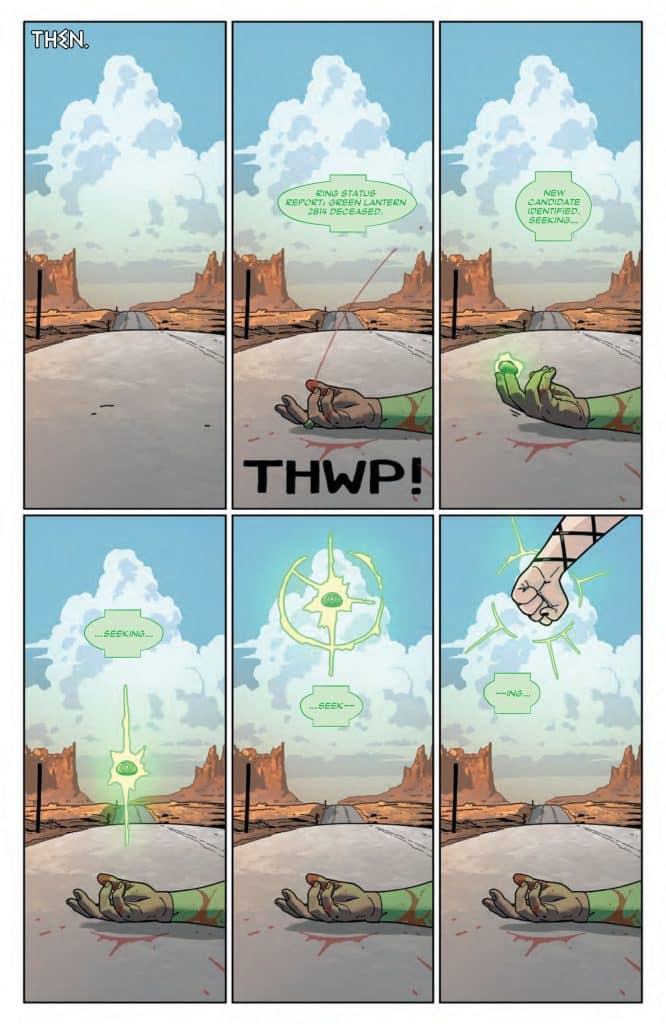
The provided preview images offer a chilling look at the scope of this battle. One particularly striking panel depicts a desolate road, where a Green Lantern ring—a symbol of galactic order—hovers over a bloodied, lifeless arm. This "status report" confirms that the Green Lantern of sector 2814 has been neutralized, serving as a grim indicator that the Matriarch’s reach extends far beyond the reach of Earth’s conventional heroes.
Furthermore, the character designs for the Matriarch, particularly in the sequences where she manipulates green energy against a desert backdrop, emphasize her mastery over forces usually reserved for the cosmic guardians. The tension between the characters, depicted in scenes where the authenticity of sacred weapons is questioned, suggests that the mystery surrounding the Matriarch’s origins will be a primary focus of the next act.
The Team Behind the War
- Tom King: Known for his penchant for deconstruction and long-form character studies, King has utilized Wonder Woman to explore themes of legacy, parenthood, and the cost of duty.
- Daniel Sampere & Bruno Redondo: These artists have become synonymous with the modern aesthetic of the DC Universe. Their ability to switch from intimate, character-driven conversations to sprawling, cinematic action sequences is the bedrock upon which "The Wonder War" is built.
Official Responses and Creative Direction
While DC Comics has kept the specific plot details of the post-Act One trajectory under wraps, the editorial team has hinted that "The Wonder War" will have long-lasting consequences for the DC Universe. In recent interviews, Tom King has emphasized that this story was designed to "strip Diana down to her essentials."
"We are asking what happens when the one person who is supposed to save everyone is the one being hunted," King stated in a recent press release. "This isn’t just about winning a fight; it’s about the survival of an ideal."
The shift in tone, moving from the hopeful, heroic adventures of the past to this darker, more urgent narrative, reflects a broader editorial shift at DC to elevate Wonder Woman as the anchor of their primary continuity. The focus on Trinity as a central player in this conflict also indicates a long-term commitment to the character, positioning her as the future of the franchise.
Implications: What "The Wonder War" Means for the Future
The conclusion of Act One carries heavy implications for the remainder of 2026 and into 2027.

- The Shift in Power: The loss of a Green Lantern and the public nature of the conflict suggest that the world is no longer looking to the Justice League as an infallible safety net. This creates a vacuum of power that the Matriarch is clearly looking to fill.
- The Legacy of Trinity: By forcing Trinity to defend her parents, the series is actively testing her capabilities and moral compass. This is a classic "rite of passage" narrative, but one executed with a high degree of brutality that will define her character for years to come.
- The Nature of the "War": The title "The Wonder War" suggests that this is not a singular event, but an ongoing state of affairs. If the first act has already resulted in such high casualties and emotional turmoil, the subsequent acts are likely to escalate in scale, potentially pulling in other members of the Justice League.
Conclusion: A Must-Read for Modern Fans
Wonder Woman #34 is more than just a monthly comic book; it is a definitive chapter in the current DC era. It challenges the reader to consider the cost of heroism and the difficulty of maintaining one’s humanity in the face of overwhelming odds. For fans of Tom King’s psychological depth or those who appreciate the breathtaking artistic detail provided by Sampere and Redondo, this issue is essential reading.
As the smoke clears on the first act, one thing is certain: the war for Diana’s soul and the future of the world has only just begun. Readers are encouraged to keep a close watch on future solicitations, as the ripples from this issue will undoubtedly be felt across every title in the DC stable.
To stay updated on all things Wonder Woman and the broader DC Universe, subscribe to Graphic Policy’s newsletter. We provide the latest insights, reviews, and news where comic books and politics meet.

 Sagoh
Sagoh
 Ammar Sabilarrohman