Nana Muazin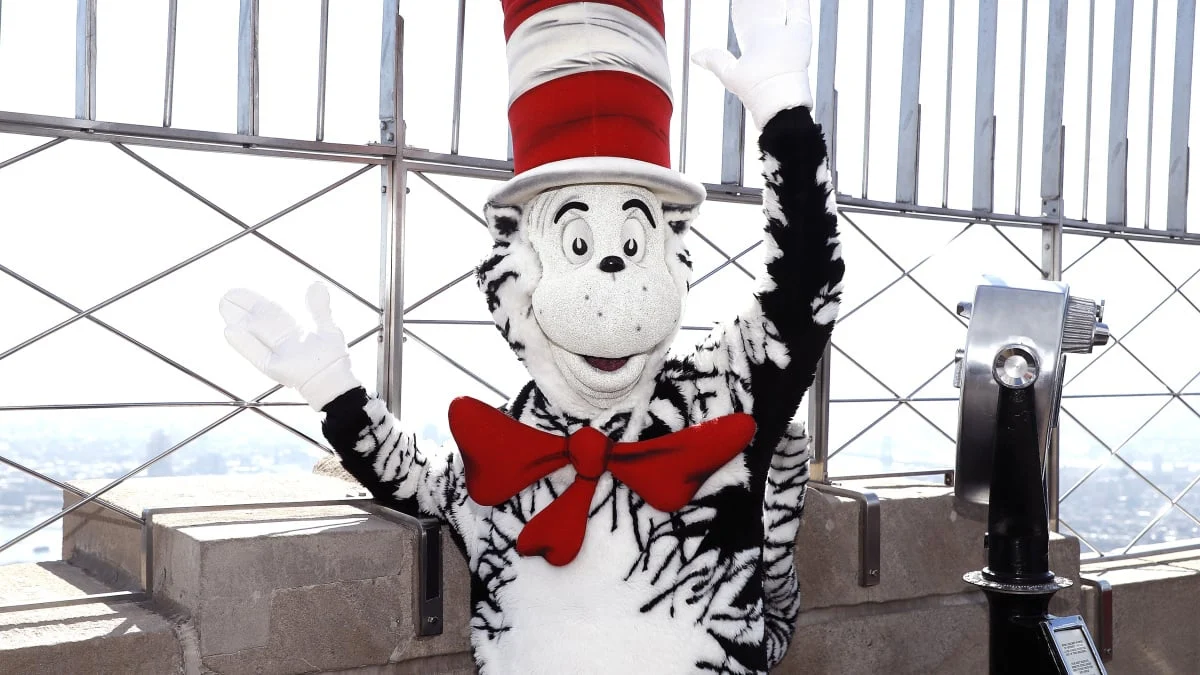
Of all the literary figures one might expect to incite widespread panic, school closures, and urgent police interventions, the whimsical, rhyming protagonist of Dr. Seuss’s classic children’s book would likely be at the bottom of the list. Yet, in a startling convergence of internet folklore and generative artificial intelligence, a sinister, reimagined version of the Cat in the Hat is currently terrorizing communities across the United States.
What began as a niche piece of digital horror-fiction has spiraled into a cross-country security crisis. The trend, characterized by the dissemination of hyper-realistic, AI-manipulated images and videos of the character lurking in residential neighborhoods, has transcended the digital realm, resulting in real-world consequences, including lockdowns, student anxiety, and criminal investigations.
The Genesis of a Digital Nightmare
The roots of the phenomenon can be traced back to late June, when a TikTok user paired a clip of Mike Myers’ unsettling portrayal of the Cat from the 2003 live-action film with an ominous, slowed-down soundtrack. The post, which featured a dark, grim caption, was intended as a piece of "creepypasta"—an internet-born horror story. The video quickly went viral, garnering over 4 million views in its first week.
The timing of the meme’s rise proved critical. Simultaneously, the original screen-used costume from the 2003 film appeared on the auction block. The high-resolution images of the suit—detached from the whimsical context of the film and presented as a hollow-eyed, tattered relic—provided amateur creators with the perfect, unsettling source material to fuel their digital narratives.
Soon, the trend morphed from a simple edit into a structured, localized horror narrative. Users began creating "sightings" videos, utilizing AI tools to place the character in driveways, peeking through bedroom windows, and roaming dark, suburban streets. These videos were often framed as doorbell camera footage, utilizing the low-resolution, grainy aesthetic common to home security systems, which lends an air of uncanny authenticity to the fabrication.
From Internet Meme to Targeted Threats
While the trend initially played out as a collective exercise in digital storytelling, it rapidly took a turn for the malicious. As the "Cat in the Hat" narrative spread across platforms like TikTok, Snapchat, and Instagram, anonymous copycat accounts began escalating the rhetoric. The vague, atmospheric horror of the early memes was replaced by direct, targeted intimidation.
These accounts began drafting lists of specific schools, students, and local communities, pairing them with chilling captions such as, "You’re next," "Don’t leave your window open," and "I’m coming for you." By pivoting from general "sightings" to naming specific, real-world targets, the perpetrators transformed a harmless piece of viral fiction into a credible-seeming threat that necessitated immediate intervention from school administrators and law enforcement agencies.
The Anatomy of the Disruption
The impact of these threats has been felt most acutely in the education sector. In Kentucky, the situation reached a breaking point in late August. Assumption High School in Louisville was forced to move classes online and cancel all extracurricular activities after a series of threatening posts naming students and faculty circulated on social media.
The disruption was not limited to a single institution. Districts across the state, including Oldham County and Bullitt County, found themselves fielding frantic calls from parents and students. The sheer volume of posts meant that even if the majority of images were clearly AI-generated, schools could not afford to dismiss them. Every report of a threat had to be treated as a potential life-safety issue, forcing a defensive posture that drained administrative resources and shattered the sense of security on campus.
Similar patterns of disruption have been reported across the country:
- Texas: School districts have implemented increased police patrols and heightened security protocols following viral videos that explicitly named students in local neighborhoods.
- Michigan: A high school was placed on a precautionary perimeter lockdown after a specific, targeted threat was directed at its student body via social media.
- Oklahoma: A local high school underwent a comprehensive security sweep, and local law enforcement increased their presence after a concerning Snapchat post surfaced.
- Tennessee: The Office of Homeland Security’s Threat Assessment Center has begun actively tracking the trend, warning the public that the dissemination of these threats is being monitored as a matter of state security.
Official Responses and the Burden of Proof
Law enforcement agencies, from local police departments to state-level homeland security units, have been forced to play a high-stakes game of whack-a-mole. In the UK and Ireland—where the trend initially gained traction before migrating to the U.S.—authorities were among the first to formally debunk the sightings. Wexford Garda repeatedly issued statements to the public, confirming that the "sightings" were entirely artificial and that no actual threat existed.
In the United States, the response has been more urgent due to the escalation of targeted threats. Louisville Metro Police, while stating that they have not found evidence of a credible, physical threat linked to the "Cat in the Hat" imagery, have nonetheless deployed their Homeland Security Unit to investigate the origin of the posts.
The legal consequences, however, are very real. In Allen County, Kentucky, a juvenile was arrested and now faces formal charges related to their involvement in circulating these threats. This arrest serves as a stern warning to other participants: the law does not distinguish between a "joke" made from behind a keyboard and a credible threat when that content disrupts public order and instills fear in a community.
The Psychology of AI-Driven Panic
The "Cat in the Hat" phenomenon bears a striking resemblance to the "killer clown" panic of 2016. However, experts in digital misinformation note a key evolution: the barrier to entry for creating panic has collapsed. During the 2016 trend, participants had to physically purchase costumes and place themselves in public view to generate fear. Today, the perpetrators do not need to leave their bedrooms.
Generative AI has allowed for the mass production of high-fidelity, convincing imagery that can be tailored to any zip code in seconds. By overlaying a familiar, "creepy" cultural icon onto the backdrop of a user’s own neighborhood, the AI effectively weaponizes the victim’s sense of place. When a student sees a picture of a monster standing in their own driveway—an image that looks identical to their own security camera feed—the cognitive dissonance between the "fake" nature of the meme and the "real" nature of the location becomes almost impossible to bridge.
Implications for the Future of Social Media
The ongoing hysteria serves as a grim case study in the intersection of generative AI, social media virality, and the fragility of public safety. As AI tools become more accessible, the ability for bad actors to manipulate public perception and incite panic will only grow more sophisticated.
For school districts and law enforcement, the "Cat in the Hat" crisis represents a new paradigm in school safety. Administrators are now tasked with navigating a landscape where the primary threat is not an intruder at the gate, but a digital ghost that can trigger a lockdown through a single, well-placed, AI-generated image.
The lesson, according to police, is clear: the digital and physical worlds have collided in a way that necessitates extreme caution. Posting a "joke" may feel like an exercise in internet clout, but when that post includes the name of a student or a school, the line between dark humor and criminal activity vanishes. As the investigation continues, authorities are urging students and parents alike to report such content to the authorities immediately rather than engaging with it, sharing it, or—worst of all—attempting to replicate it.
Ultimately, the Cat in the Hat may be a fictional character, but the fear it has generated is undeniably real. Until the digital ecosystem finds a way to mitigate the spread of these AI-generated threats, the classroom, once a sanctuary for learning, remains vulnerable to the echoes of a meme gone wrong.


 Asep Darmawan
 Iffa Jayyana