It is a scenario familiar to nearly every smartphone user in the modern age. You unlock your phone for a brief, intentional break—perhaps to check a notification or quickly look up a piece of information. Twenty minutes later, you find yourself trapped in the digital equivalent of a labyrinth: caught in the crossfire of three separate internet arguments, spiraling over a geopolitical crisis you learned about only moments ago, and staring blankly at your screen, wondering why you picked up the device in the first place.
This cycle, widely known as "doomscrolling," has become the default setting for the modern social media experience. However, a growing movement of digital intentionality is challenging this involuntary consumption. Enter "bloomscrolling": the conscious act of curating one’s digital diet to prioritize uplifting, educational, or serene content over the relentless stream of outrage and anxiety-inducing news.
The Anatomy of Bloomscrolling: Defining a Conscious Shift
At its core, bloomscrolling is a shift from passive consumption to active curation. Instead of allowing an algorithmic feed to dictate your emotional state—serving up inflammatory headlines or divisive commentary—the bloomscroller acts as a digital gardener. They actively seek out "flowers": footage of bioluminescent coral reefs, the meticulous process of an artisan at work, or stories of community resilience.
"It is not about burying your head in the sand or pretending that the world’s problems do not exist," explains neuropsychologist Dr. Sanam Hafeez. "Bloomscrolling is about creating a psychological sanctuary. It is an antidote to the constant state of hyper-arousal that doomscrolling triggers. It allows for a healthier balance, ensuring that your digital intake isn’t exclusively composed of stimuli that make you feel anxious, angry, or perpetually overwhelmed."
This practice is rooted in the recognition that our digital environment is, in effect, our modern landscape. Just as we might choose to walk through a park rather than a busy construction site to clear our heads, we can choose to navigate the internet in ways that replenish our mental reserves rather than depleting them.
A Chronology of Digital Fatigue
The rise of bloomscrolling is a direct response to the evolution of social media platforms over the last decade.
- 2010–2015: The Discovery Phase. Early social media was defined by connection. Users primarily saw content from friends and family. Algorithms were primitive, and "scrolling" was a finite activity; eventually, you reached the end of the updates.
- 2016–2020: The Engagement-First Era. Platforms pivoted toward "infinite scroll" designs and engagement-based algorithms. Data revealed that content provoking strong emotional reactions—specifically fear, anger, and moral outrage—generated the most clicks and time-on-site. This birthed the term "doomscrolling," as users found themselves unable to look away from the mounting crises reported in real-time.
- 2021–2023: The Awareness Peak. As mental health professionals began to link excessive social media consumption to rising rates of anxiety and depression, users began to self-regulate. Studies on screen time, the impact of "blue light" on sleep, and the neurological cost of constant task-switching entered the mainstream discourse.
- 2024–Present: The Era of Intentionality. Bloomscrolling emerged as a proactive lifestyle trend. It represents a maturation of the user base, where individuals are reclaiming their agency, utilizing "mute" buttons, and favoring "niche" communities over the chaotic "everything-feeds" of the past.
Supporting Data: Why "Cute" and "Calm" Matter
Critics often dismiss the efficacy of looking at "wholesome" content, suggesting it is a shallow fix for deep-seated digital burnout. However, psychological research suggests that these images provide tangible cognitive benefits.
In a landmark 2012 study published in PLOS One, researchers in Japan conducted three experiments to measure how viewing images of "kawaii" (cute) animals affected human performance. The results were striking: participants who viewed images of puppies and kittens showed a marked improvement in tasks requiring dexterity and visual focus compared to those who viewed images of adult animals or neutral objects. The researchers concluded that the positive emotion elicited by cute stimuli creates a "broaden-and-build" effect, increasing the brain’s ability to focus and perform with precision.
Further evidence comes from a 2021 study involving young adults, which examined the physiological impact of viewing nature-based imagery. When participants were exposed to photos of lush environments for just three minutes, self-reported levels of comfort and relaxation increased significantly. While these images did not necessarily boost energy levels, they served as a reliable mechanism for stress reduction—a vital tool in the high-stress environment of the modern workforce.
While these studies did not test the environment of a social media feed, they provide a scientific foundation for why a "digital palette cleanser" works. They suggest that our brains are hardwired to respond to nature and nurturing stimuli, and that redirecting our focus toward these elements can serve as a legitimate physiological reset.
Official Responses and Industry Shifts
The tech industry has been forced to acknowledge the "doomscrolling" epidemic. In recent years, major platforms have introduced "time-well-spent" features, such as screen-time trackers, "take a break" reminders, and tools to curate algorithmic suggestions.
However, experts argue that these technical tools are only as effective as the user’s intent. "The algorithm is designed to optimize for time, not for well-being," notes tech policy analyst Marcus Thorne. "While companies like Meta or ByteDance offer tools to limit usage, the core architecture of the feed remains predicated on keeping you engaged. Bloomscrolling is an act of user-side rebellion against that architecture."
Some creators are working in tandem with this shift. Influencers such as Alexis Nikole Nelson (@alexisnikole), known for her foraging education, and Sam Bentley (@sambentley), who focuses on environmental progress, have built massive, loyal followings precisely because they provide "bloomscrolling-friendly" content. They represent a growing class of creators who prioritize value-add content over the "rage-bait" that dominated the late 2010s.
The Implications: Toward a Healthier Digital Future
The shift toward bloomscrolling has profound implications for how we interact with technology in the long term.
1. The Death of the Passive Feed
As users become more discerning, the "one-size-fits-all" feed is likely to decline. We are seeing a move toward smaller, community-led platforms (such as Discord or niche subreddits) where users have more control over the quality of their intake.
2. The Rise of "Digital Hygiene"
Much like we track our calories or exercise, "digital hygiene" is becoming a standard wellness metric. Bloomscrolling is a component of this; it involves auditing who you follow and why. If an account, even a "positive" one, makes you feel inadequate or pressured, the recommendation is to unfollow. The goal is not just to see "happy" things, but to see things that are personally nourishing.
3. The Need for "End Points"
Perhaps the most critical implication is the realization that even good content can be bad in excess. The "infinite scroll" is inherently antithetical to healthy habits because it lacks a natural conclusion. The future of digital health lies in platforms that incorporate "stopping points"—places where the feed ends, and the user is encouraged to close the app. Tools like the "Brick" (a physical hardware lock for apps) are becoming popular because they provide the external friction that internal willpower often lacks.
4. Bringing Digital Inspiration Offline
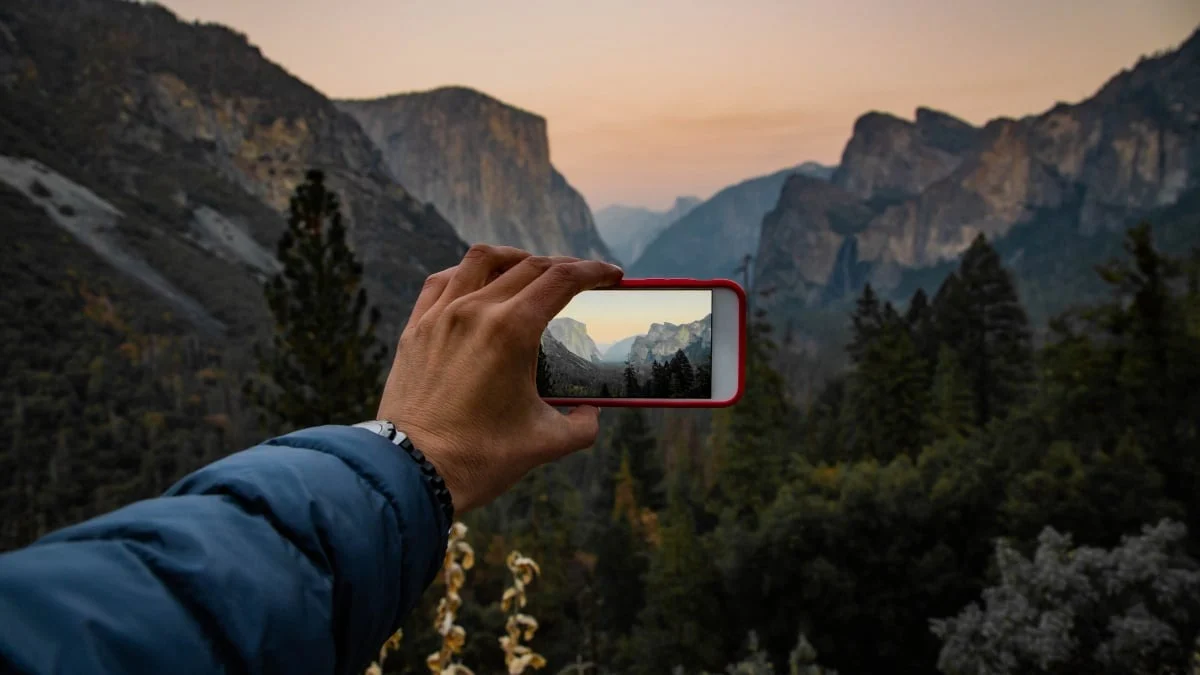
The ultimate goal of bloomscrolling is to act as a bridge to the physical world. The healthiest outcome is not to stay on the app to watch a video about gardening, but to be inspired enough by that video to go outside and plant something yourself. When digital consumption acts as a catalyst for offline action, it ceases to be a distraction and becomes a tool.
Conclusion: Reclaiming the Scroll
Bloomscrolling is more than a trend; it is a defensive strategy for the modern human mind. By intentionally choosing what we allow into our consciousness, we can mitigate the psychological toll of the digital age.
The next time you find yourself reaching for your phone during a quiet moment, pause for a second. Ask yourself what you are looking for. Are you looking for a hit of adrenaline from a heated debate, or are you looking for a moment of genuine wonder? The algorithm will always be waiting to give you the former, but with a bit of effort, you can train it to give you the latter.
The internet is a vast, chaotic, and often dark place, but it is also home to the sum total of human creativity, natural beauty, and scientific discovery. Bloomscrolling is the art of navigating that space with a compass, ensuring that when you finally put your phone down, you feel refreshed, inspired, and connected to the world, rather than drained by it. After all, the best part of any digital experience is the moment you decide to leave it behind and engage with the world in front of you.