Laily UPN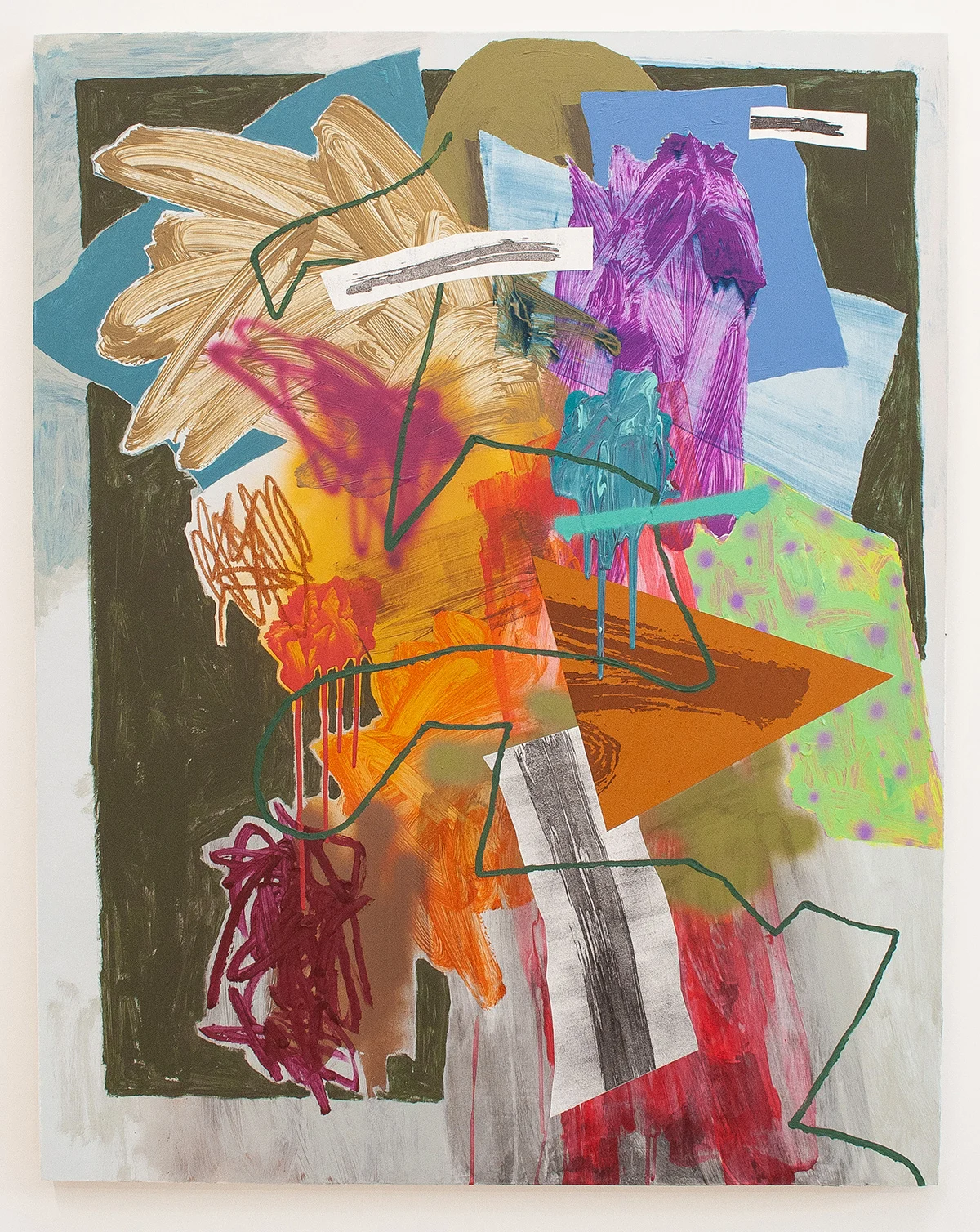
In the contemporary art landscape, few artists bridge the gap between the tactile history of painterly abstraction and the fragmented visual speed of the digital age as seamlessly as Shane Walsh. An educator, traveler, and prolific practitioner, Walsh has carved out a unique space where historical formalism meets the "cut-and-paste" ethos of 1990s subculture. His work, currently represented by the Asya Geisberg Gallery in New York City, serves as a testament to the idea that abstraction is not merely a rejection of reality, but a sophisticated rearrangement of it.
The Architect of the Abstract: An Artistic Profile
Shane Walsh’s journey to the forefront of modern abstraction is rooted in a rigorous academic foundation. Having earned his Master of Fine Arts (MFA) from the University of Washington-Seattle, Walsh transitioned from the intensive environment of graduate study to a dual career as a practicing artist and an educator. Currently, he serves as a faculty member at the University of Wisconsin-Milwaukee, where he teaches painting and drawing.
His practice is inherently itinerant. By splitting his time between his studios in Milwaukee and New York City, Walsh is exposed to the contrasting rhythms of the American Midwest and the high-octane art market of the East Coast. This duality is reflected in his canvases, which oscillate between quiet, contemplative geometric structures and chaotic, high-energy compositions.
A Chronology of Influence: From Zines to Fine Art
To understand Walsh’s current output, one must look at the aesthetic landscape that defined his formative years. The 1990s—a decade characterized by the rapid democratization of media through xeroxed zines, early internet aesthetics, and the proliferation of television motion graphics—serve as the bedrock for his methodology.
The 1990s "Cut and Paste" Ethos
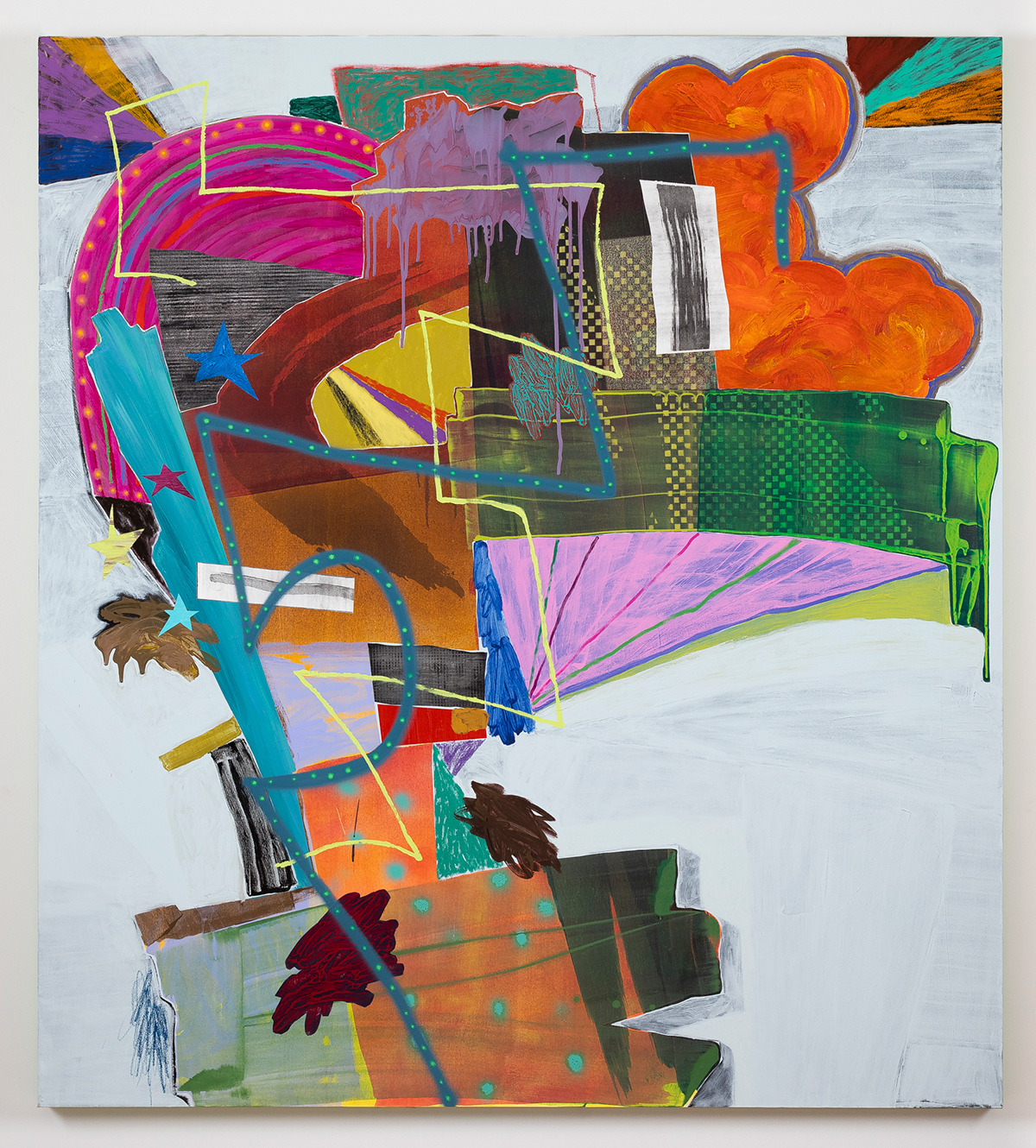
Walsh’s work is fundamentally collage-based, even when it manifests as a singular, unified oil painting. This "cut and paste" philosophy is a direct lineage from the DIY culture of the 90s, where disparate visual elements were physically sliced, photocopied, and rearranged. In Walsh’s hands, this process is elevated from ephemeral zine culture to the longevity of the fine art medium.
Historical Synthesis
Walsh does not merely replicate historical abstraction; he engages with it as a conversation partner. By layering elements of disco-era design, early graffiti, and classic geometric abstraction, he forces a collision between "high" and "low" art. The result is a visual language that feels both nostalgic and distinctly futuristic, reflecting the complexities of a life lived across different eras of media consumption.
Supporting Data: The Mechanics of the Canvas
Walsh’s technique involves a meticulous choreography of paint handling. He approaches the surface as a testing ground for "charged interactions." The interplay of hard-edged geometric shapes against fluid, painterly brushwork creates a tension that keeps the viewer’s eye in constant motion.
The Toolkit of the Modern Painter
Walsh describes his process as a form of "redirecting and choreographing" an ensemble of visual tools. These include:
- Geometric Abstraction: Providing the structural skeleton of the work.
- Graphic Imagery: Borrowed from contemporary motion design to provide a sense of urgency and speed.
- Diverse Paint Handling: Ranging from flat, matte surfaces to thick, impasto textures, used to delineate space and emphasize the physicality of the painting.
This approach is not accidental; it is a calculated effort to arrive at a "customized, reinvented, individualized version of abstraction." By reshaping existing visual codes, Walsh attempts to create a lexicon that is specific to his own life experiences while remaining relevant to the chaotic, information-saturated nature of the current moment.
Official Perspectives: The Artist on His Craft
In recent statements regarding his creative process, Walsh has been candid about his desire to move beyond the traditional boundaries of abstract expressionism.

"With all these elements in my toolbox, I then redirect and choreograph this ensemble on the painting surface, employing a variety of paint handling techniques and charged interactions," Walsh notes. "By reshaping existing visual codes, I hope to create a customized, reinvented, individualized version of abstraction that is specific to my life experiences and relevant to this time and place."
This sentiment reflects a shift in contemporary art: the rejection of the "purity" of the canvas in favor of a hybridized, inclusive approach. Walsh’s work acknowledges that the modern viewer is accustomed to multi-screen realities and non-linear narratives, and his paintings mirror this fragmented experience.
The Implications of Walsh’s Approach
The implications of Walsh’s methodology are twofold: they challenge the traditional elitism of abstract art and suggest a path forward for painting in an increasingly digital world.
Redefining the Abstract
By incorporating elements like early graffiti and disco-design motifs, Walsh dismantles the notion that abstraction must be "high-minded" or removed from the common experience. Instead, he positions the canvas as a space for cultural processing. His work suggests that abstract painting is one of the most effective ways to reconcile the overwhelming amount of imagery we encounter daily.
The Future of Painting
As artists continue to grapple with the role of the physical object in a world dominated by AI and digital generation, Walsh’s reliance on the "hand-made" collage aesthetic provides a human anchor. The labor involved in his "cut and paste" process—the physical application of paint to mimic digital fragmentation—serves as a bridge between the physical and virtual realms.
Beyond the Canvas: The Broader Cultural Ecosystem
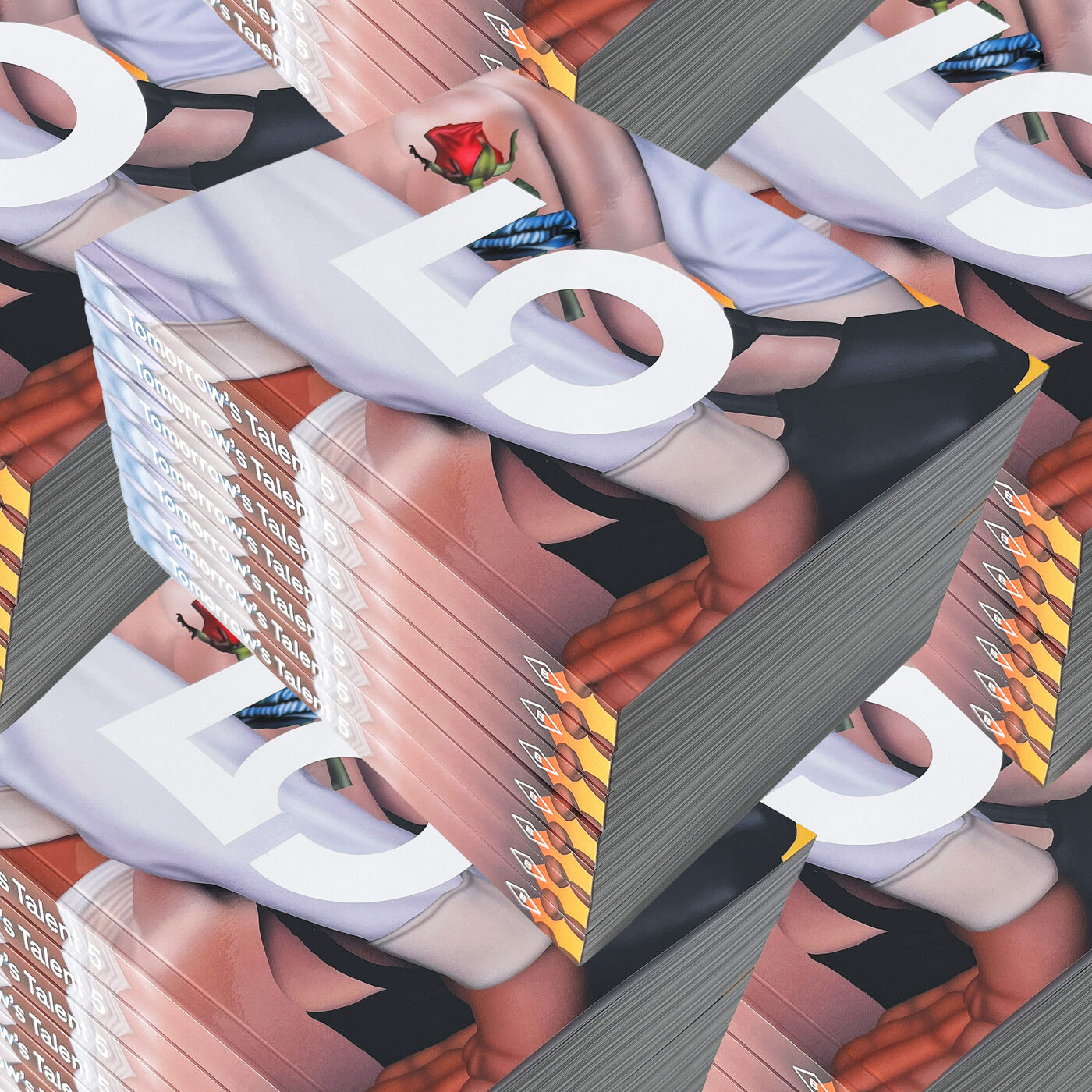
While Walsh focuses on the evolution of his own practice, the broader art community continues to foster new modes of engagement, much like the initiatives currently seen at platforms like Booooooom. Whether through the curation of emerging talent—as seen in projects like Tomorrow’s Talent 5—or the creation of community-driven spaces, the contemporary art world is increasingly focused on connection.
Walsh’s work sits comfortably within this ecosystem. He is not an isolated genius, but a participant in a larger, collective effort to redefine visual literacy. His commitment to teaching at the University of Wisconsin-Milwaukee ensures that his philosophy of "deconstructed abstraction" will continue to influence a new generation of artists.
Conclusion: A Living Language
Shane Walsh’s contribution to contemporary painting is his ability to synthesize the noise of history and the speed of the present into a coherent visual statement. By viewing the painting surface as a site of negotiation, he invites the viewer to participate in the act of reconstruction.
As he continues to split his time between the quietude of the Midwest and the relentless pace of New York, one can expect his visual language to evolve further. His work remains a vital, shifting, and deeply personal attempt to capture what it means to exist in a world that is constantly being cut, pasted, and reassembled. For those following the trajectory of modern abstraction, Walsh’s work is not just a study in technique; it is a profound exploration of how we make sense of our surroundings through the act of creation.
Further Reading and Engagement
For those interested in exploring the broader context of contemporary art, consider the following resources:
- Shane Walsh Official: Explore his complete portfolio and exhibition history at shanewalshpaintings.com.
- Asya Geisberg Gallery: Keep track of upcoming exhibitions and gallery representation for Walsh and other contemporary artists.
- Contemporary Art Discourse: Engage with ongoing conversations about the role of the "hand-made" in an era of digital saturation through publications and community platforms that focus on the intersection of design, subculture, and fine art.

 Nana
Nana
 Basiran