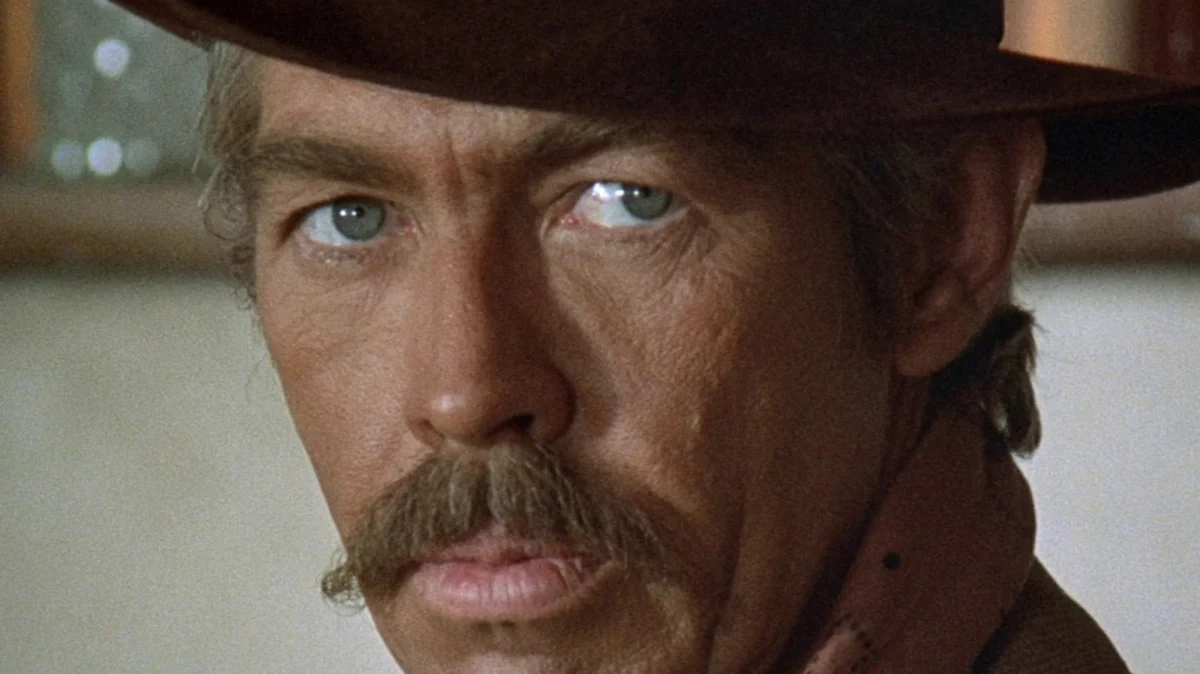
When cineastes discuss the pantheon of the Spaghetti Western, the conversation inevitably gravitates toward a predictable orbit: the "Dollars" trilogy and the operatic grandeur of Once Upon a Time in the West. Sergio Leone, the architect of the modern Western aesthetic, is rightly lauded for his innovative use of extreme close-ups, tension-building silences, and the evocative, haunting scores of Ennio Morricone. Yet, buried beneath the massive shadow of these titans lies a 1971 masterpiece that remains woefully under-appreciated: Duck, You Sucker! (also known as A Fistful of Dynamite).
As Leone’s penultimate directorial effort, the film represents a bridge between his classic Western tropes and the more mature, somber character studies that would define his later career. Despite being a sprawling, visually stunning epic that captures the chaotic fervor of the Mexican Revolution, it remains the director’s least-viewed Western, a forgotten chapter in a legendary career that demands a new generation of fans.
The Main Facts: A Tale of Two Renegades
At its core, Duck, You Sucker! is a character-driven collision between two polar opposites. The film introduces us to Juan Miranda (Rod Steiger), a coarse, unrefined Mexican bandit leading a band of outlaws, and John Mallory (James Coburn), an Irish Republican Army (IRA) explosives expert on the run.
The premise is deceptively simple: a chance encounter leads to a strained partnership. Juan, driven by greed and a desire to rob the Mesa Verde bank, believes he has found the perfect accomplice in the dynamite-obsessed Mallory. However, the film quickly subverts expectations. Instead of a typical "buddy-western" dynamic, Leone presents a complex, often antagonistic "frenemy" relationship. As they are swept up into the turbulence of the 1910 Mexican Revolution, their personal vendettas and moral apathy are forced into the light, transforming them into reluctant revolutionaries.
The film is characterized by its tonal fluidity. It oscillates between explosive, high-octane action—a Leone staple—and a surprisingly poignant, almost melancholic exploration of the human cost of political idealism.
Chronology: The Evolution of a Masterpiece
To understand why Duck, You Sucker! occupies such a unique space, one must look at the timeline of Leone’s career. By 1971, Leone had already redefined the genre.
- 1964-1966: The "Man With No Name" trilogy (A Fistful of Dollars, For a Few Dollars More, and The Good, the Bad and the Ugly) established the visual language of the Spaghetti Western, characterized by moral ambiguity and heightened stylization.
- 1969: Once Upon a Time in the West arrived as a meditative, elegiac tribute to the myth of the American frontier, signaling Leone’s move toward grander, more operatic narratives.
- 1971: Duck, You Sucker! was released. It was intended to be a smaller, more intimate story compared to the sweeping scope of Once Upon a Time in the West, yet it retained the technical ambition that Leone fans demanded.
- 1984: The cycle concluded with Once Upon a Time in America, a massive 229-minute crime epic that saw Leone move away from the frontier entirely.
Placed in this chronology, Duck, You Sucker! serves as the vital link. It bridges the gap between the "mythic" West of the 60s and the "realistic" tragedy of his final film. It is the moment Leone stopped romanticizing the outlaw and started interrogating the ideological cost of their survival.
Supporting Data: Why It Remains Under the Radar
Despite its technical brilliance, the film has struggled to maintain the cultural footprint of its predecessors. According to data from platforms like Letterboxd, Duck, You Sucker! remains the least-watched entry in Leone’s primary Western canon.
Several factors contribute to this:
- Casting Controversy: Much like The Good, the Bad and the Ugly, the film features a white American actor (Rod Steiger) in brownface, playing a Mexican character. While historical context provides some nuance, modern audiences—and critics alike—find this choice increasingly difficult to reconcile. As noted by critic Zach Vasquez, while the performances of Steiger and Eli Wallach are undeniably powerful, the visual artifice of the makeup serves as a barrier to entry for contemporary viewers.
- The "Accidental Hero" Problem: Unlike the cool, detached protagonist of the Dollars trilogy, Juan and John are intentionally unlikable. Juan’s introduction involves an act of sexual violence, and John is a man haunted by the literal and figurative explosions of his past. Leone refuses to provide the audience with a moral compass, which makes for a challenging viewing experience compared to the archetypal heroism of Clint Eastwood.
- The Title Conundrum: The film’s identity crisis—being released under various titles including A Fistful of Dynamite and Once Upon a Time… the Revolution—likely diluted its marketing and confused audiences, preventing it from cementing a singular, recognizable brand.
Official Responses and Critical Re-evaluation
Critics have often been divided on the film, though the tide is slowly turning. At the time of its release, many reviewers struggled with its shift in tone. They expected the gritty, silent tension of Leone’s earlier works and were instead met with a film that was surprisingly "cheeky" and comedic.
However, retrospective analysis has been much kinder. Many now argue that the comedic undertones are not a weakness, but a sophisticated layer of satire. By juxtaposing the horrific realities of war with the absurdity of the protagonists’ banter, Leone creates a scathing critique of political martyrdom. The "spirited" performances of Steiger and Coburn have also been highlighted as a masterclass in chemistry. Despite Coburn’s notoriously questionable Irish accent, the emotional weight he brings to the character of John—a man disillusioned by the futility of political violence—anchors the film in a profound sense of tragedy.
Implications: The Legacy of the "Sucker"
The implications of Duck, You Sucker! within the context of cinema history are significant. It is a film that dares to ask: What happens to the "hero" when the smoke clears and the revolution fails?
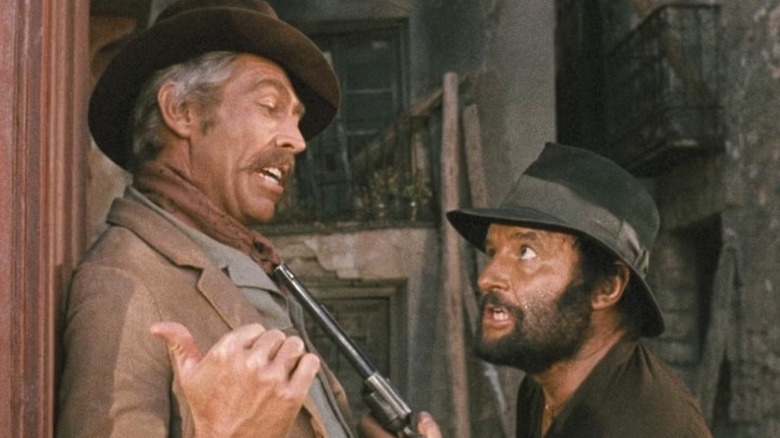
Leone was not interested in the sanitized version of history. He used the Mexican Revolution not as a backdrop for a standard shoot-out, but as a vehicle to explore the trauma of the individual. When John Mallory reflects on the love triangle that haunts him, or when Juan realizes that his "heroism" is merely a result of circumstance and survival, we are seeing the end of the Western myth.
The film serves as a reminder that Sergio Leone was never just a director of gunslingers; he was a director of people. Duck, You Sucker! is a raw, often uncomfortable, and undeniably vital piece of filmmaking. It invites the audience to stop looking for a hero and start looking at the humans behind the masks.
For those who have limited their appreciation of Leone to the "Man With No Name," Duck, You Sucker! is a necessary journey. It is a masterpiece that requires a bit of patience and a willingness to confront the uglier, more human side of the Western mythos. In an era where we often prioritize the familiar, there is a distinct pleasure in uncovering a film that, despite being over 50 years old, still feels like a provocative, defiant, and gloriously complex piece of art. It is time to stop viewing it as the "overlooked" footnote and start recognizing it as the vital, beating heart of Leone’s late-career evolution.