For years, a running joke in the entertainment industry—and a frequent observation from fans—has been the uncanny vocal similarity between Seth Rogen and his interviewers. Yet, as Rogen sits across from me at the Middleburg Film Festival, nestled in the rolling, serene horse country of Virginia, it is clear that while the voice may be familiar, the career trajectory has shifted into uncharted territory.
Following the historic, critically lauded run of his television series The Studio, Rogen has arrived at a pivotal juncture. Rather than resting on his laurels or retreating to the comfort of familiar comedic tropes, he has chosen a path of deliberate complexity. With the release of the darkly comic relationship drama The Invite and his decade-long passion project, the hand-drawn animated feature Tangles, Rogen is executing a "one-two punch" that few in the industry saw coming.
The Artistic Shift: The Invite and the Art of Subversion
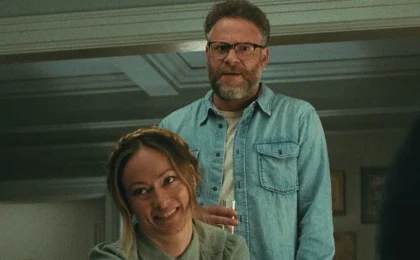
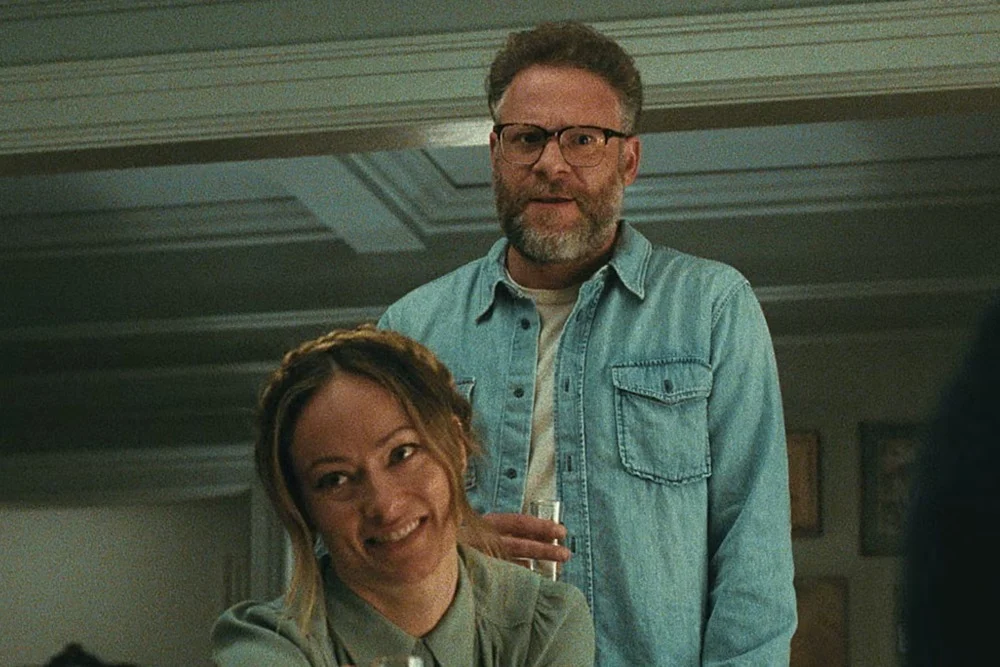
In The Invite, an A24 dinner-party indie directed by Olivia Wilde, Rogen portrays Joe—a husband grappling with the erosion of his marriage during a singular, excruciating evening shared with neighbors played by Penélope Cruz and Edward Norton.
On the surface, the casting appears to be another "Seth Rogen role." However, the performance proves to be his most nuanced to date. Rogen credits the film’s success to Wilde’s collaborative ethos, noting that she actively invited him and Norton to dismantle the script’s rigid structure.
"She could have just not used any of it," Rogen reflects. "If she had stuck strictly to the script, I just would not have been as funny in it. She allowed us to affect the tone of the film with our performances, inserting humor where it wasn’t intended and allowing for dramatic monologues that subverted the original pacing."
Rogen acknowledges that for many comedic actors, transitioning to drama is often viewed as a "cheat code"—a way to garner critical acclaim by simply doing less. He recalls a conversation with Jonah Hill during the production of Moneyball (2011), where Hill predicted that his dramatic turn would earn him more accolades than his comedic work. While Rogen concedes that he has engaged in such roles, he is adamant that his work in The Invite is different. He wasn’t just "not being funny"; he was generating a new, complex form of comedy within a high-stakes dramatic framework.

Tangles: A Ten-Year Gamble
If The Invite represents a tonal shift, Tangles represents a structural marathon. Directed by first-time feature filmmaker Leah Nelson and adapted from Sarah Leavitt’s graphic memoir, the film chronicles the harrowing reality of a mother’s Alzheimer’s diagnosis. Produced by Rogen’s Point Grey Pictures, the hand-drawn, black-and-white feature is a stark outlier in an animation landscape currently dominated by high-gloss, CGI studio franchises.
The project spent a decade in development, a testament to Rogen’s stubborn belief in the material. "When we give up on it is when it doesn’t happen," he asserts. The production involved a star-studded cast, including Julia Louis-Dreyfus, Bryan Cranston, Abbi Jacobson, and Samira Wiley, all of whom provided their voices to the project.
Unlike standard animated films, which often undergo iterative processes—rewriting the third act after test screenings, for example—Tangles required a rigid, labor-intensive approach. Because every frame is hand-drawn, the team had to commit to their narrative choices early. For Rogen, the decade-long journey was standard for the type of high-quality, independent work he aims to foster. "If something is good, I believe you can find a way to make it," he says.
The Evolution of The Studio and Industry Meta-Commentary
As Rogen moves into the second season of his hit show The Studio, the industry is watching closely. The series has become known for its sharp, satirical take on the "awards game." Rogen confirms that the new season will be even more ambitious, featuring appearances from industry titans that were "terrifying" to direct.
When asked if the show includes specific moments of personal humiliation from his own career in the awards circuit, Rogen remains coy: "You’ll see." However, he is open about the shift in his own perspective. Before his involvement in the film Steve Jobs, Rogen was largely removed from the high-stakes world of festival circuits and Academy campaigns. That experience opened a door to a "secret part of the industry" he hadn’t previously known.
"I’ve seen people go on this journey and get the exact outcome they were hoping for, and it ultimately gave them none of the things they hoped it would," Rogen says. "I’ve also seen people not get the outcome they wanted, yet they had a good time and maintained perspective. It is a fascinating part of our industry."

Implications: A Changing Industry Landscape
The conversation naturally shifts to the broader state of cinema. With veteran executives like Peter Rice moving to streaming giants like Netflix, the debate over the health of theatrical exhibition remains heated. Rogen, however, expresses a cautious, burgeoning optimism.
"The fact that so many people are going to theaters compared to the last few years is so encouraging," he notes. "We are finally getting over that hump of the pandemic and the strikes. It reminds me of when I was a kid." While acknowledging that certain aspects of the industry are "terrifying," he maintains that the communal experience of cinema is making a tangible comeback.
Looking Forward: From Darkwing Duck to Creative Advice
Amidst his dramatic and independent pursuits, Rogen remains deeply connected to his roots. His upcoming revival of Darkwing Duck for Disney+ is a project he has been nurturing for years. He highlights the "meta" nature of the original series, which he believes mirrors the self-referential humor he has cultivated throughout his career.
Throughout the interview, one piece of advice echoes louder than the rest—a lesson imparted to him by the late stand-up comedian Darryl Lenox when Rogen was just 14 years old. "He told me to write what only I could write," Rogen recalls. "Don’t talk about ‘crazy glue’ jokes that any asshole can write. Talk about trying to sneak into parties and the specific things happening to you."
It is a philosophy that has served him well, from the basement of Superbad to the halls of the Middleburg Film Festival. As he navigates this new, mature phase of his career, Seth Rogen is no longer just the guy with the distinct voice; he is a producer and actor who has learned that the most powerful stories are the ones that only he can tell.
Quick Hits: 10 Questions with Seth Rogen
- Childhood nickname: "Sethical."
- Regretful obsession: Spent every penny as a child on Magic: The Gathering cards.
- Karaoke stance: Hates it, but if forced, will sing "All for Love" by Bryan Adams with two raspy-voiced friends.
- Alternate title for The Invite: The Apartment.
- Secret talent: Surprisingly flexible; can almost get his leg behind his head.
- Favorite ice cream: McConnell’s (a preference influenced by Barbra Streisand).
- Cannot live without: Glasses and shoes.
- Dream role (history): Ghostbusters.
- Who to kick out of Ghostbusters: Dan Aykroyd.
- Relatable fictional character: Homer Simpson.